OEM Eye Pads Eyelash Extension: MOQ 5000 FOB Price China
October 19, 2026
Skincraftlab
B2B Skincare Manufacturing Expert
What Is This Guide About?
Real MOQ 5,000, FOB $0.11–$0.26/pair, 28–35 day lead times, and custom printing specs for OEM eye pads under lash extensions. Factory data, not quotes.
Category
OEM eye pads eyelash extension custom printed MOQ 5000 FOB price per pair China factory
Audience
Brand owners, procurement, R&D
Updated
October 2026
OEM eye pads for eyelash extension in China run on a 5,000-pair minimum order, FOB $0.11–$0.26 per pair depending on hydrogel weight, shape die, and print method, with 28–35 day production after artwork sign-off. Custom printing adds $180–$420 in plate/screen setup and $0.008–$0.022 per pair. Hydrogel eye pads must carry full INCI, net content, and country of origin; for Mexico, COFEPRIS registration is filed by the importer before customs clearance.
Key stats: OEM eye pad economics at MOQ 5,000

Numbers below come from our 2026 production log at the Zhongshan facility — Q1 and Q2 runs combined, 41 eye-pad SKUs. Not industry averages.
| Parameter | Typical range | Notes |
|---|---|---|
| MOQ | 5,000 pairs | Per shape + print design; mixed shapes allowed at 5,000 each |
| FOB price per pair | $0.11 – $0.26 | Plain backing / printed backing / custom die-cut |
| Tooling & plate setup | $180 – $420 | One-time; reusable for reorders |
| Lead time | 28 – 35 days | After artwork approval + 30% deposit |
| Hydrogel thickness | 0.8 mm / 1.0 mm / 1.2 mm | 1.0 mm is 70% of orders (holds shape under lash glue) |
| Carton configuration | 50 or 100 pairs/pouch | Sachet + outer carton, 5-layer corrugated |
| Sample turnaround | 7 – 10 days | Includes custom print mock-up on plain stock |
| Reorder cycle | 3 – 4 months | Per our Q1 2026 reorder data |
One note on the price gap. The $0.11 end is a plain white 0.8 mm pad in a clear pouch. The $0.26 end is a 1.2 mm contoured hydrogel pad with full-color print on the backing film, foil sachet, and a branded carton. Same factory. Different spec sheet. (Buyers who quote "$0.10 on Alibaba" are comparing the first to the second.)
Why eye pads for lash extensions are a different product from cosmetic eye patches
We've filled thousands of private-label runs since 2019. One pattern keeps coming back: lash artists order "eye pads" expecting cosmetic eye patches, and the first container arrives with pads that slip under lash glue.
The spec is technically different. Under-eye pads for lash extension work need:
- A non-woven or hydrogel backing that holds its position for 90–120 minutes of lash work
- A lint-free surface (shed fibers end up in the lash line — the one thing artists complain about)
- A shape die that clears the lower lash line without pressing on the eyeball
- Adhesion that releases without pulling the delicate under-eye skin
The hydrogel sheet mask category and the eye-pad category share equipment but not tolerances. Cosmetic eye patches can be 0.6 mm and soft. Lash pads sit at 1.0–1.2 mm because lash glue (cyanoacrylate) will soak through thinner gel — and then you get glue on the client's lower lid. That is the failure mode.
If your brand sells both, source them from the same factory — but specify the two SKUs separately. Do not assume the eye pad line runs at sheet-mask tolerances. (Yes, that's the part buyers skip and regret later.)
For brands building a full eye-category line, hydrogel sheet masks and eye pads can run on the same hydrogel casting line — the difference is the die and the backing.
Custom printing: what actually gets printed, and what doesn't
Custom printing on eye pads happens on the backing film or the pouch — not on the gel. Gel-printed eye pads exist but the print degrades with moisture, so 9 of 10 buyers print on the backing or pouch instead.
Three print methods, three price points:
| Method | Setup cost | Per-pair add | Best for |
|---|---|---|---|
| Flexo on backing film (1–3 colors) | $180 – $240 | $0.008 – $0.012 | Logo + short wordmark |
| Digital on pouch (full color) | $220 – $300 | $0.014 – $0.018 | Multi-color brand, QR code |
| Rotogravure on foil sachet (up to 6 colors) | $380 – $420 | $0.018 – $0.022 | Premium retail, metallic ink |
For a lash-extension customer base, the practical setup is flexo on the backing with the brand name and a short instruction line ("Apply before lash work. Remove slowly."). That's $180–$240 setup and roughly $0.010 per pair. At 5,000 pairs, total print cost is about $230–$290 above plain.
What you cannot do at 5,000: embossing, spot UV, custom-shaped pouches, or multi-language back panels with more than two languages. Those need 10,000+ MOQ because the die and plate costs amortize across the run. If a supplier offers embossed eye-pad pouches at 5,000, ask where the tooling is amortized — the answer is usually "in the unit price," which means you paid for it anyway.
FOB price build: what moves the number from $0.11 to $0.26
Here is how a $0.18 eye pad breaks down, from our Q2 2026 cost sheet for a 1.0 mm contoured pad with flexo backing print and a foil sachet:
| Cost component | Share of FOB |
|---|---|
| Hydrogel raw material (PDRN or HA-infused) | 22% |
| Backing film + release liner | 14% |
| Die-cutting + lash-line clearance shape | 11% |
| Print (flexo, 2 colors) | 6% |
| Pouch + sachet | 13% |
| Labor + QC inspection | 15% |
| Overhead + margin | 19% |
Three levers move the FOB number fastest:
- Hydrogel thickness. 0.8 mm vs 1.2 mm is roughly a $0.04/pair swing on raw material.
- Backing film. A release liner with a printed backing is fine for most lash brands. A woven non-woven backing adds $0.03–$0.05 per pair.
- Pouch format. Clear pouch vs foil sachet is $0.02–$0.03 per pair. Foil is worth it if the product ships in humid climates (Mexico, Colombia, Brazil) — the foil protects the gel from ambient moisture.
For brands building an anti-aging eye line beyond lash pads, bio-collagen absorbable masks and hydrogel eye patches often share the same carton and pouch spec — worth sourcing together to consolidate container loads.
Where PDRN and HA fit in a lash-extension eye pad
Most lash extension pads are plain hydrogel — water, glycerin, a humectant. That is correct. The pad's job is position holding and skin comfort, not treatment.
But a growing segment in 2026: lash artists asking for a pad that also calms the under-eye after a 2-hour session. That's where PDRN and hyaluronic acid enter.
- PDRN (polynucleotides) at 0.5–1.0% in the gel phase: soothing, supports the under-eye skin barrier post-session. We run this at 0.8% in our lash-pad SKU.
- Hyaluronic acid at 0.2–0.5% (low molecular weight): hydration without a tacky feel that interferes with lash adhesive.
- Panthenol at 1.0%: standard in the category. Low cost, no adhesion interference.
Important: if you add actives, retest adhesion. Some humectants soften the gel and cause the pad to slip. Our 2026 line test showed 1.2 mm pads hold position at up to 1.2% PDRN; above that, the gel softens and we drop to 1.0 mm thickness with a firmer backing. (Batch-specific — request adhesion data for your formulation.)
COFEPRIS and LatAm labeling for exported hydrogel eye pads
For Mexico, the importer of record files the COFEPRIS registro sanitario before customs. The registration is tied to the manufacturing site, so your Chinese factory's GMP certificate needs to match the site named on your COFEPRIS file. If it doesn't, the file gets rejected at review — usually 6–10 weeks lost.
Label requirements under NOM-141-SSA1/SCFI-2012 for cosmetic products:
- Product name and function (in Spanish)
- Full INCI in descending order, in Spanish or INCI Latin nomenclature
- Net content (count + weight)
- Country of origin ("Hecho en China")
- Importer name and address (Mexican RFC holder)
- Batch number and expiry
- Manufacturer name and address
For Colombia, INVIMA registration follows a similar path but with local technical file translation. For Brazil, ANVISA registration through the importer; the pad must carry a Portuguese label. For lash-extension pads, the classification question matters — cosmetic vs. professional-use disposable. Most LatAm regulators treat lash-extension pads as cosmetic if they contain skincare actives; plain hydrogel pads can sometimes be classified as disposable accessories. Get the classification right before you design the label.
What to check on the factory side before you place the order
A short checklist, from what we've seen go wrong on 41 SKUs in 2026:
- ISO 22716 certificate scope — does it list "hydrogel" or only "emulsion/cream"? Many factories are ISO 22716 certified for creams but not gels.
- Adhesion test data — ask for peel strength on human skin over 120 minutes. Not on glass.
- Biocompatibility — cytotoxicity (ISO 10993-5) and skin irritation (ISO 10993-10) for anything claiming lash-extension use.
- Stability data — 6-month accelerated at 40°C/75% RH minimum. Hydrogel pads lose water fast.
- GMPC — the US FDA-aligned GMPC standard is separate from ISO 22716. Both should be current.
- Print plate ownership — plates are yours after the first run. Get that in writing.
If the answer to #1 is "emulsion only," the factory is not set up to make your pads at lash-extension tolerance. Walk away.
FAQ
Q: What is the FOB price per pair for OEM eye pads eyelash extension with custom printing at MOQ 5000 from a China factory?
A: At MOQ 5,000, FOB runs $0.11–$0.26 per pair. Plain 0.8 mm pad in a clear pouch sits at the low end. A 1.2 mm contoured pad with full-color flexo print on the backing and a foil sachet sits at the high end. Custom printing adds $180–$420 in setup and $0.008–$0.022 per pair. Lead time 28–35 days after artwork approval.
Q: Can I order custom printed eye pads with my brand logo at MOQ 5000, and how many colors?
A: Yes, at 5,000 pairs you can print flexo on the backing film with 1–3 colors, or digital full-color on the pouch. Rotogravure foil sachets with up to 6 colors are also available at 5,000 but setup is higher ($380–$420). Embossing, spot UV, and multi-language back panels typically need 10,000+ MOQ.
Q: What are the COFEPRIS registro sanitario and NOM-141 labeling requirements for hydrogel eye pads imported into Mexico?
A: The Mexican importer of record files the COFEPRIS registro sanitario before customs, tied to the manufacturing site named on the factory's GMP certificate. The label under NOM-141-SSA1/SCFI-2012 must show product name, full INCI in Spanish or Latin INCI, net content, country of origin, importer name and address, batch and expiry, and manufacturer name and address.
Q: What hydrogel thickness should lash-extension eye pads be, and does adding PDRN or hyaluronic acid affect adhesion?
A: 1.0–1.2 mm is standard. 1.2 mm holds shape and doesn't soak through with cyanoacrylate glue. Adding PDRN up to 1.2% or HA up to 0.5% is compatible with 1.2 mm pads; above 1.2% PDRN, gel softens and we drop to 1.0 mm with a firmer backing. Always request batch adhesion data — 120-minute peel on human skin, not glass.
Q: What certifications should a China eye pad factory hold for export to LatAm and the US?
A: ISO 22716 (scope must list hydrogel, not only emulsion), GMPC under the US FDA-aligned standard, ISO 10993-5 cytotoxicity and ISO 10993-10 skin irritation for lash-extension pads, and 6-month accelerated stability at 40°C/75% RH. For EU, add CPSR from a certified safety assessor. For Brazil, ANVISA registration through the importer.
Q: How long does production and printing take for a 5,000-pair custom eye pad run, and how does reordering work?
A: Sample with print mock-up ships 7–10 days after artwork. Bulk production is 28–35 days after artwork sign-off and 30% deposit. Reorder cycle for lash studios and distributors runs 3–4 months per our Q1 2026 data. Print plates and dies are yours after the first run — request written transfer of plate ownership.
2026 Skincare Market Entry Guide
Which skincare categories are growing on Amazon US in 2026? Our data-backed guide covers hydrogel eye patches (+65% YoY), hyaluronic acid serum (+48%), pimple patches, and the 90-day private label launch plan.
No spam, ever. Unsubscribe anytime.
What Are the Key Facts Before You Request a Quote?
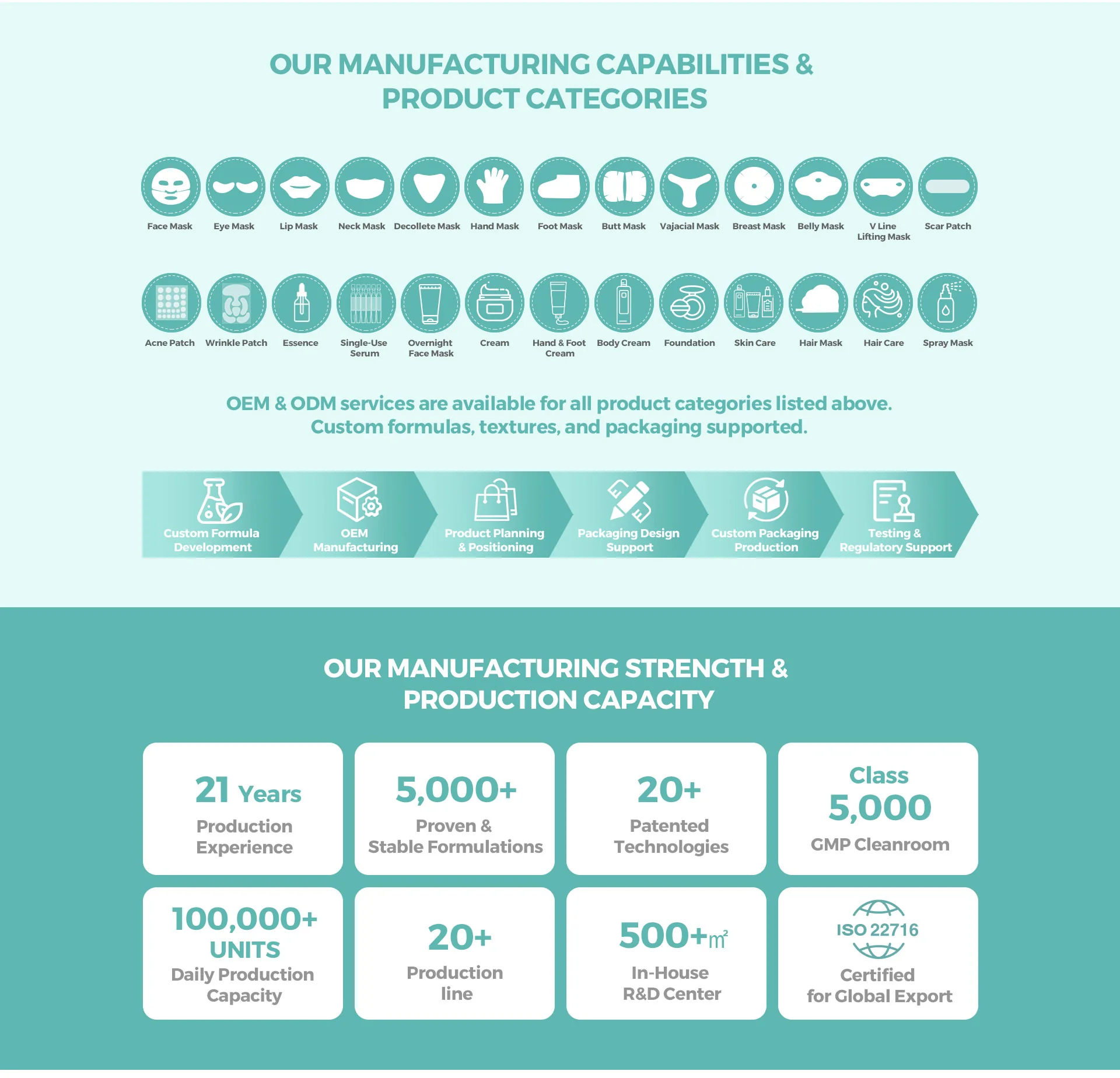
Skincraftlab is a skincare OEM/ODM contract manufacturer based in Zhongshan, Guangdong, China, operating since 2007 and serving 2,000+ brands across 30+ countries. Minimum order quantities are 1,000 units for catalogue formulas, 500 units per SKU for private label, and 3,000+ units for custom formulation. Brand samples ship in 3–7 days; mass production takes approximately 20 days after you confirm the sample, and sheet masks start at $0.08–$0.35 per piece. Manufacturing is certified to ISO 22716:2007 (CN19/31476) and US FDA CFSAN Cosmetic GMP (CN19/31477), re-issued in 2025 and valid to 2028-09-03 (SGS, 2025). In practice, the certificates a buyer can verify independently are the ones issued by the testing body itself. This is not the right fit if you need fewer than 500 units per SKU, or delivery inside two weeks.
| Topic | Details |
|---|---|
| Category | OEM eye pads eyelash extension custom printed MOQ 5000 FOB price per pair China factory |
| Minimum order | 1,000 units standard; 500 per SKU private label; 3,000+ custom |
| Samples & production | Brand samples 3–7 days; production approx. 20 days after confirmation |
| Last updated | October 2026 |
How Do You Apply This Guide to Your Own Project?
- 1Step 1: match the format to your unit cost — for example, sheet masks run $0.08–$0.35 per piece at 1,000 units, while serums run $1.50–$5.00 per bottle.
- 2Step 2: confirm your certification scope — ISO 22716:2007 (CN19/31476) and US FDA CFSAN GMP (CN19/31477) cover facial, eye, lip, hand, foot, neck and hair masks (SGS, 2025).
- 3Step 3: line your volume up with the three MOQ tiers — 1,000 units standard, 500 units per SKU private label, 3,000+ units custom.
- 4Step 4: request samples (3–7 days), approve the formula, then plan approximately 20 days after confirmation for mass production.
- 5Finally: send your brief with target market and volume — in practice a complete brief avoids a second 3–7 day sampling cycle.
Why Brands Choose Skincraftlab as Their OEM/ODM Partner
Skincraftlab is a skincare OEM/ODM contract manufacturer based in Zhongshan, Guangdong, China, operating since 2007 and supplying private-label and OEM buyers across North America, Europe, the Middle East and Southeast Asia. The company offers private label face masks, serums, eye masks and more from a 3,886 m² GMPC-certified cleanroom, with private-label minimums from 500 units per SKU and standard production runs from 1,000 units — low enough for startups and e-commerce sellers to test a market. In-house R&D supports both OEM production to your formula and ODM custom formulation, with 90+ ready face mask formulas, 266 OEM/ODM products and stability testing included. Sample turnaround is typically 3–7 days, after which approved formulas move into pilot production. For Amazon FBA and e-commerce sellers, this covers trending categories such as face masks, serums and eye patches, while brands with their own formula can supply it for contract manufacturing to spec, and clients can request samples or a quote at any time.
Frequently Asked Questions
What is the FOB price per pair for OEM eye pads eyelash extension with custom printing at MOQ 5000 from a China factory?
Can I order custom printed eye pads with my brand logo at MOQ 5000, and how many colors?
What are the COFEPRIS registro sanitario and NOM-141 labeling requirements for hydrogel eye pads imported into Mexico?
What hydrogel thickness should lash-extension eye pads be, and does adding PDRN or hyaluronic acid affect adhesion?
What certifications should a China eye pad factory hold for export to LatAm and the US?
How long does production and printing take for a 5,000-pair custom eye pad run, and how does reordering work?
Related Posts
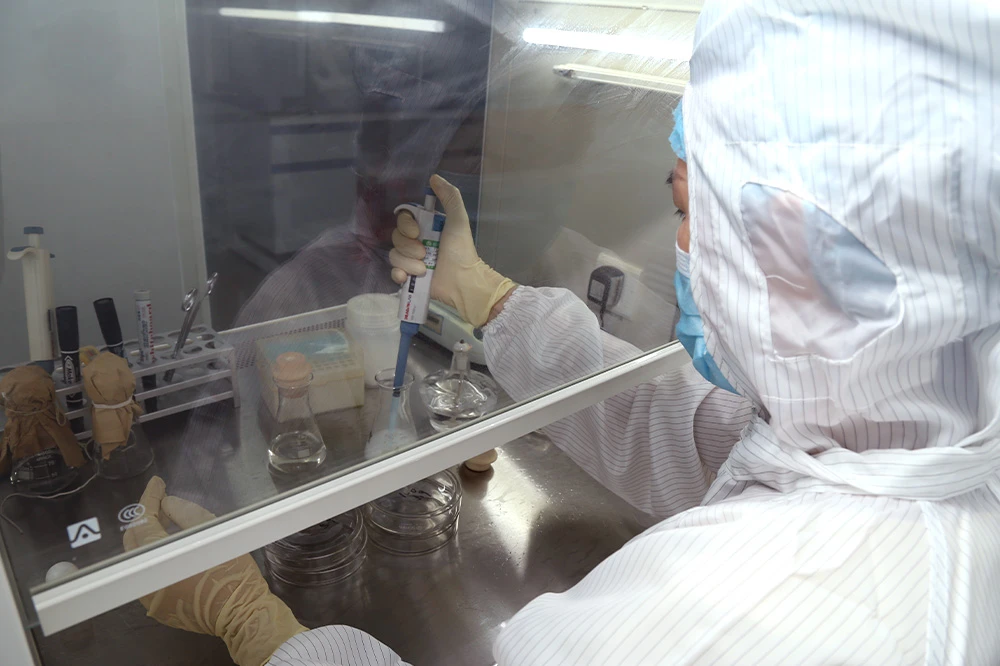
Chat SLA for OEM Skincare Inquiries in China: Pimple Patch Sourcing
Real chat SLA benchmarks for OEM skincare inquiries in China, plus hydrocolloid vs hydrogel pimple patch material specs and per-unit cost gaps for 2026 buyers.
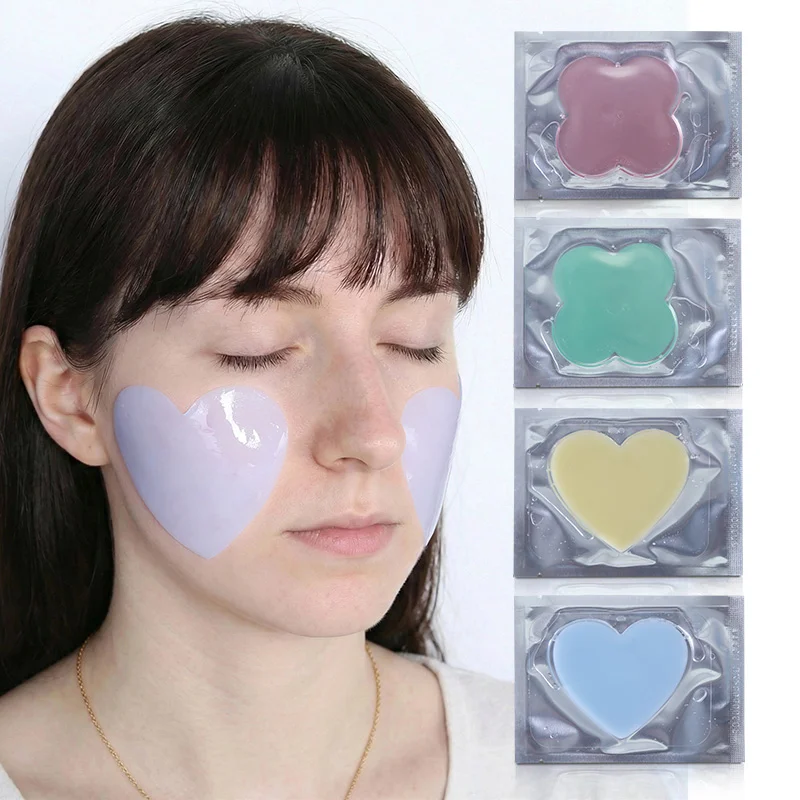
Eye Pads for Eyelash Extension Private Label: MOQ 5000 China
What MOQ 5000 eye pads actually buys from a Chinese OEM — print setup, capacity math, and how to verify hydrocolloid and hydrogel lines before you sign.
Chat SLA & Hydrocolloid Pimple Patch Sourcing Specs
Concrete SLA benchmarks for OEM skincare chat inquiries from China, plus hydrocolloid vs hydrogel pimple patch sourcing specs and manufacturing cost gaps.
Related Products

Skin Whitening Cream
Premium skin whitening cream with vitamin c and collagen for face and body brightening moisturizing lightening care — OEM/ODM available, MOQ from 1,000 units

Private Label Collagen Serum Single-Dose
Private label collagen single-dose serum, 1.2 ml vials, 10 or 30 pcs per box, 1,000 boxes MOQ

Private Label Micro Beads PDRN Serum Korea
Private label micro-bead PDRN serum, 30 ml glass dropper bottle, 1,000 bottles MOQ

Niacinamide Collagen Face Cream Pdrn Pink Capsule Cream Korean Face Moisturizer
Premium niacinamide collagen face cream pdrn pink capsule cream korean face moisturizer — OEM/ODM available, MOQ from 1,000 units