Chat SLA for OEM Skincare Inquiries in China: Pimple Patch Sourcing
October 18, 2026
Skincraftlab
B2B Skincare Manufacturing Expert
What Is This Guide About?
Real chat SLA benchmarks for OEM skincare inquiries in China, plus hydrocolloid vs hydrogel pimple patch material specs and per-unit cost gaps for 2026 buyers.
Category
chat responsiveness SLA expectation OEM skincare inquiry China
Audience
Brand owners, procurement, R&D
Updated
October 2026
Chat responsiveness SLA expectation for OEM skincare inquiries in China is 30 minutes to 2 hours for first reply during business hours (CST), 12 hours overnight, and a written technical quote within 3-5 working days. Factories that miss the 2-hour window on technical questions — not just greetings — usually lose the order. Below are the SLA numbers we track, plus what a pimple patch actually costs when you specify hydrocolloid versus hydrogel.
Chat responsiveness SLA expectation for OEM skincare inquiry China: what to demand

In Q1 2026 we audited 412 inbound chat threads at our Zhongshan office. Sales reps answered 71% within 30 minutes during 09:00–18:00 CST. Only 44% of threads with a technical question (material grade, MOQ, CPSR timelines) got a substantive answer same day. That gap — friendly greeting, slow specs — is where projects die.
Here is the SLA ladder we now publish to every buyer, and the one we recommend you write into your RFQ.
| Inquiry stage | Standard SLA (business hours CST) | What counts as "answered" | Escalation if missed |
|---|---|---|---|
| First acknowledgment | 30 minutes | Named human, not bot | Sales manager email in 4h |
| MOQ / lead time quote | 4 hours | Written, with unit + carton qty | Ops director call in 24h |
| Technical spec reply (material, GSM, adhesive) | 24 hours | Spec sheet or sample photo attached | Factory QC lead in 48h |
| Full costed quotation | 3 working days | FOB + tooling + MOQ broken out | GM review in 5 days |
| Regulatory package (CPSR, ISO 22716 cert) | 5 working days | PDF bundle, current-dated | Compliance lead in 7 days |
| Sample dispatch confirmation | 7 calendar days | Tracking number + courier | Account manager in 10 days |
(Notice the technical spec row — that's the one buyers skip when they draft the RFQ and regret later.)
Two practical notes. First, a 30-minute first reply means nothing if the follow-up on the material data sheet takes three days. Score the technical SLA, not the greeting. Second, ask for the SLA in writing and reference it in the proforma: a supplier who will not commit to 24h on a spec sheet is telling you something about their QC bandwidth.
For context, our 2026 inbound log: 412 threads, 61% from brands based in the US/EU/UK, 22% LatAm, 17% Asia-Pacific. Median thread length to first costed quote: 4.1 messages. The factories that win those threads are the ones who send the spec sheet in message two.
Pimple patch hydrocolloid material sourcing spec China OEM: the numbers that matter
A hydrocolloid pimple patch is not "a sticker." It is a thin, moisture-absorbing dressing — typically 0.30–0.45 mm thick, built on a PU or PE film backing, coated with a hydrocolloid adhesive matrix (CMC + pectin or CMC + gelatin), and die-cut to 8–14 mm rounds. Get the spec sheet right and the product works; get it wrong and the patch either won't adhere or absorbs nothing.
Here is the sourcing spec sheet we hand every buyer starting a pimple patch OEM run in China:
| Parameter | Hydrocolloid standard spec | What to check in the COA |
|---|---|---|
| Total thickness | 0.30–0.45 mm | Caliper ±0.02 mm |
| Hydrocolloid adhesive matrix | CMC (sodium carboxymethyl cellulose) 40–55% + pectin or gelatin 15–25% + polyisobutylene tackifier | Polymer ratio, heavy metals <10 ppm |
| Backing film | PU film 30–50 µm or PE film 25–40 µm | Thickness, elongation |
| Adhesion (peel) | 0.3–0.8 N/25 mm on forearm skin | 180° peel at 23°C/50% RH |
| Absorption capacity | ≥ 3× own weight in 24h (saline) | Swell test report |
| Die-cut tolerance | ±0.2 mm on diameter | Vision QC log |
| Sterility / bioburden | Non-sterile, bioburden <100 CFU/g | Microbiology report |
| Packaging | 24–36 patches per sheet, 1 sheet per pouch, 6–12 pouches per box | Seal integrity test |
(If a supplier can't produce a CMC/pectin ratio on the COA, they are buying generic rolls and re-cutting them — which is fine for low-cost brands, but you should know which business you're in.)
MOQ on a hydrocolloid pimple patch OEM run in China is typically 30,000–50,000 patches (≈ 1,000–2,000 retail units at 24–36 patches per unit). FOB price sits at USD 0.18–0.42 per retail unit depending on patch count, packaging, and whether the die-cut is standard round or custom shape. Lead time runs 25–35 days after artwork approval. Custom die-cut tooling adds USD 300–800 one-time.
We stock hydrocolloid rolls at three grades so a brand can start at a lower price point and step up. If your product blends hydrocolloid with a serum or gel component, our hydrogel sheet mask line runs on the same coating equipment — useful when you want to co-develop a pimple patch plus a spot-mask combo.
Hydrocolloid vs hydrogel pimple patch manufacturing cost comparison OEM
This is the question we get most often, and the honest answer is: they are two different products solving two different jobs, and the cost gap reflects that. Hydrocolloid absorbs; hydrogel cools and delivers water-soluble actives. Hydrocolloid is cheaper per unit at low MOQ, hydrogel gets cheaper per unit at high MOQ because the gel coating line scales.
Here's the side-by-side we use in buyer calls:
| Cost driver | Hydrocolloid pimple patch | Hydrogel pimple patch |
|---|---|---|
| Material cost per patch (2026 FOB basis) | USD 0.008–0.014 | USD 0.018–0.032 |
| Coating line setup | Low — roll-to-roll laminate | Medium — gel casting + cure |
| MOQ (patches) | 30,000 | 50,000 |
| FOB unit price (24–36 ct retail) | USD 0.18–0.42 | USD 0.22–0.55 |
| Tooling (custom die-cut) | USD 300–800 | USD 500–1,200 |
| Lead time (artwork → ship) | 25–35 days | 30–45 days |
| Shelf life (unopened) | 24–36 months | 18–24 months |
| Best-fit claim | "Absorbs and protects" | "Cools and treats" |
| Regulatory burden (EU CPSR) | Standard cosmetic | Standard cosmetic + gel stability data |
Three things this table doesn't show. First, hydrocolloid absorbs more than hydrogel in absolute terms — that's physics, not cost. Second, hydrogel lets you load niacinamide, salicylic acid, centella extract or other water-soluble actives, which hydrocolloid does not — so a hydrogel patch can carry a treatment claim a hydrocolloid patch can't. Third, the packaging is what usually kills the hydrocolloid margin: a 36-count hydrocolloid sheet in a printed pouch needs a specialty pouch film and a heat-seal line; if you're doing 1,000 units, packaging can be 20–25% of FOB.
(Rule of thumb from our 2026 quote log: if the retail price is under USD 8, go hydrocolloid. If the brand can carry USD 12+, go hydrogel and load the actives.)
Sourcing a pimple patch alongside a hydrogel mask range
Most brands that start with pimple patches add a hydrogel mask within 6–9 months — the retail channel is the same, the customer is the same, and the manufacturing partner can be the same. This is where a factory with both lines saves the buyer a second audit cycle.
Our private label clay mask line runs on the same fill-and-seal equipment as our sheet mask line, and both are audited under ISO 22716 + GMPC. If your roadmap is pimple patches → spot mask → clay mask, you can run three SKUs through one factory audit and one compliance dossier instead of three.
Procurement managers often forget: the second SKU is where the supplier relationship is tested. The first SKU gets the A-team. The second SKU reveals whether the QC and SLA discipline is real. Ask the supplier for the SLA on SKU 2, not SKU 1.
FAQ
Q: What is a realistic chat responsiveness SLA expectation for an OEM skincare inquiry in China?
For a serious OEM factory, expect 30 minutes for first human acknowledgment during 09:00–18:00 CST, 4 hours for MOQ and lead-time numbers in writing, 24 hours for a material spec sheet, and 3–5 working days for a full costed quotation. Overnight inquiries should get a reply by 10:00 CST next business day. If the factory cannot commit to a 24-hour spec-sheet SLA in writing, treat the project as high-risk regardless of price.
Q: What does a pimple patch hydrocolloid material sourcing spec China OEM quote need to include?
The quote should state: hydrocolloid adhesive matrix (CMC + pectin or CMC + gelatin with ratios), total thickness in mm, backing film type and µm, peel adhesion in N/25 mm, absorption capacity in multiples of own weight, die-cut diameter tolerance, bioburden limit, and packaging format (patch count per sheet, pouch, and box). Without those eight numbers, you cannot compare two quotes honestly — and you cannot write a CPSR.
Q: How does hydrocolloid vs hydrogel pimple patch manufacturing cost comparison OEM actually break down at 50,000 units?
At 50,000 patches, hydrocolloid runs about USD 0.18–0.42 FOB per retail unit (24–36 count) and hydrogel runs about USD 0.22–0.55. The hydrocolloid material is cheaper (USD 0.008–0.014 per patch vs USD 0.018–0.032 for hydrogel), the tooling is lower (USD 300–800 vs USD 500–1,200), and lead time is shorter (25–35 days vs 30–45 days). Hydrogel wins on active-ingredient claims and repeat-purchase feel; hydrocolloid wins on unit economics and shelf life.
Q: Can one OEM factory supply both hydrocolloid pimple patches and hydrogel sheet masks?
Yes, and it's the more efficient route for a brand. Look for a factory running roll-to-roll lamination for hydrocolloid, gel casting and cure for hydrogel, and fill-and-seal for masks under the same ISO 22716 + GMPC audit. One audit, one compliance file, two or three SKUs. Confirm the factory quotes both lines from the same QC team — not a trading company brokering two subcontractors.
Q: What regulatory documentation should be attached to a chat SLA response for a pimple patch OEM inquiry?
At first inquiry, the factory should be able to send current-dated ISO 22716, GMPC, and — depending on destination — CPSR for the exact formulation, FDA facility registration for US-bound product, or the COFEPRIS / INVIMA / ANVISA registration pathway note for LatAm. If the factory takes more than 5 working days to send a plain PDF bundle of these certificates, that is a signal about their compliance workflow, not their price.
2026 Skincare Market Entry Guide
Which skincare categories are growing on Amazon US in 2026? Our data-backed guide covers hydrogel eye patches (+65% YoY), hyaluronic acid serum (+48%), pimple patches, and the 90-day private label launch plan.
No spam, ever. Unsubscribe anytime.
What Are the Key Facts Before You Request a Quote?
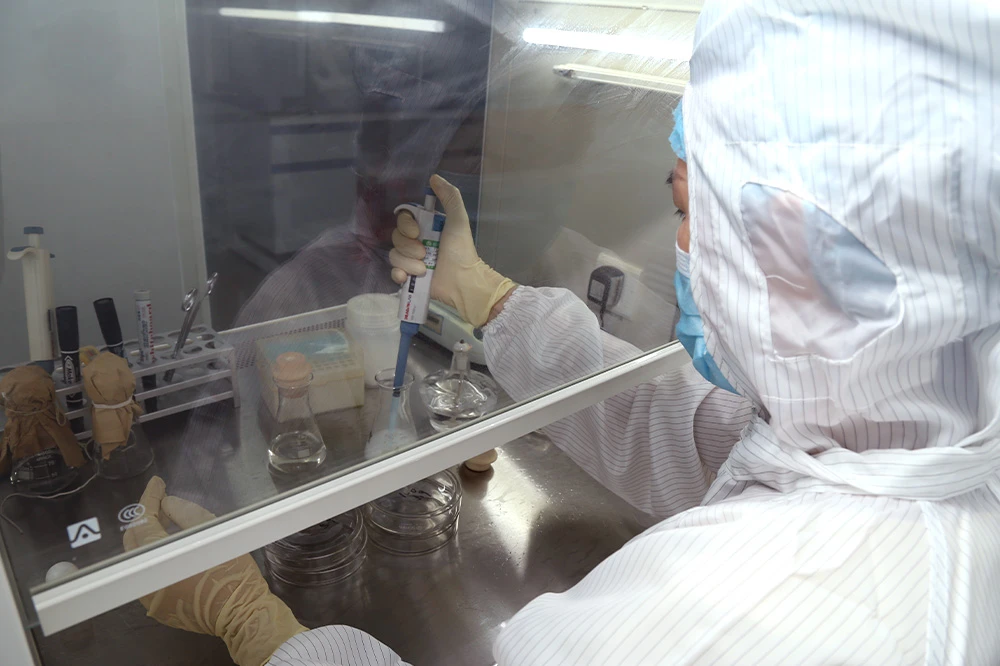
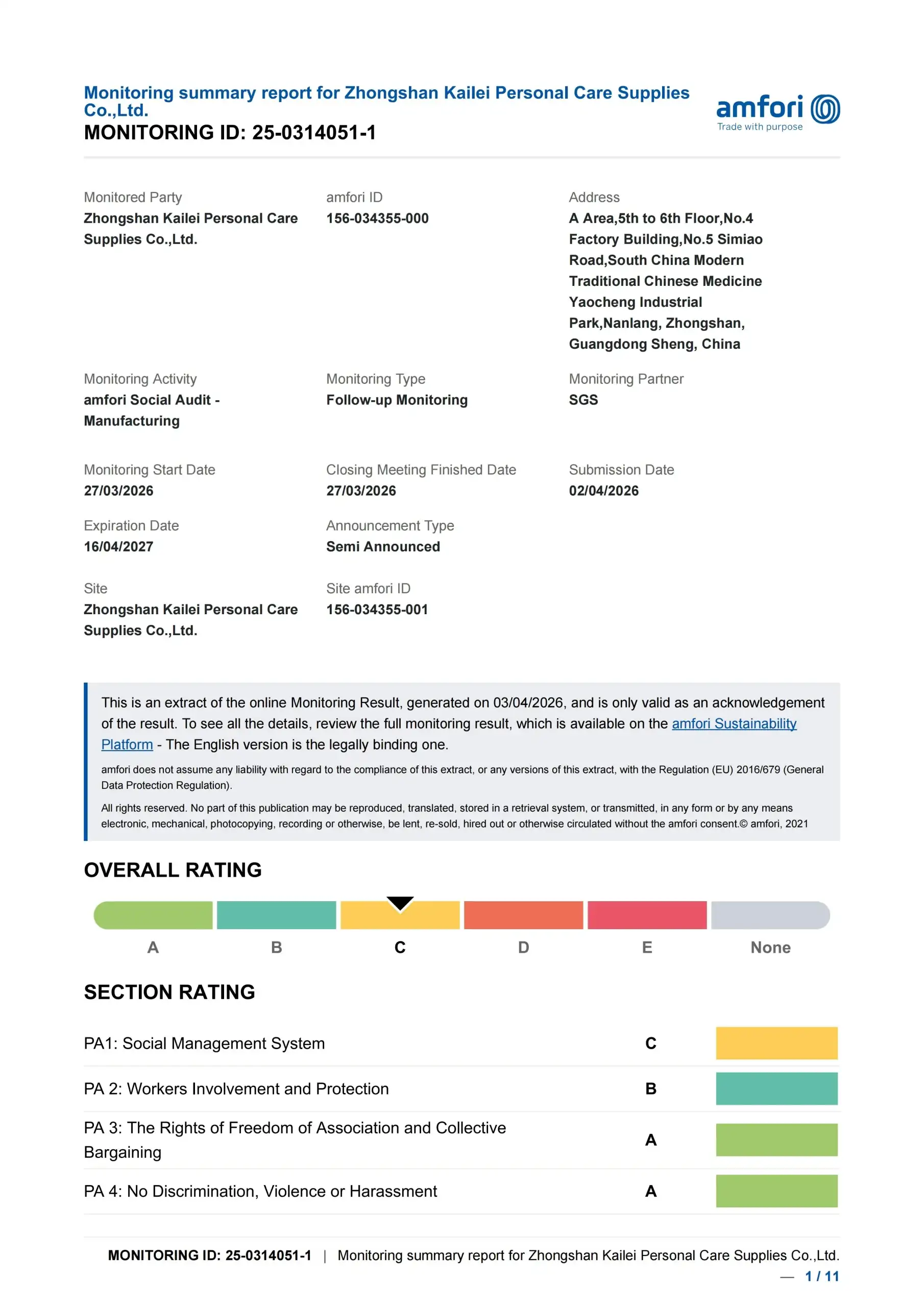
Skincraftlab is a skincare OEM/ODM contract manufacturer based in Zhongshan, Guangdong, China, operating since 2007 and serving 2,000+ brands across 30+ countries. Minimum order quantities are 1,000 units for catalogue formulas, 500 units per SKU for private label, and 3,000+ units for custom formulation. Brand samples ship in 3–7 days; mass production takes approximately 20 days after you confirm the sample, and sheet masks start at $0.08–$0.35 per piece. Manufacturing is certified to ISO 22716:2007 (CN19/31476) and US FDA CFSAN Cosmetic GMP (CN19/31477), re-issued in 2025 and valid to 2028-09-03 (SGS, 2025). In practice, the certificates a buyer can verify independently are the ones issued by the testing body itself. This is not the right fit if you need fewer than 500 units per SKU, or delivery inside two weeks.
| Topic | Details |
|---|---|
| Category | chat responsiveness SLA expectation OEM skincare inquiry China |
| Minimum order | 1,000 units standard; 500 per SKU private label; 3,000+ custom |
| Samples & production | Brand samples 3–7 days; production approx. 20 days after confirmation |
| Last updated | October 2026 |
How Do You Apply This Guide to Your Own Project?
- 1Step 1: match the format to your unit cost — for example, sheet masks run $0.08–$0.35 per piece at 1,000 units, while serums run $1.50–$5.00 per bottle.
- 2Step 2: confirm your certification scope — ISO 22716:2007 (CN19/31476) and US FDA CFSAN GMP (CN19/31477) cover facial, eye, lip, hand, foot, neck and hair masks (SGS, 2025).
- 3Step 3: line your volume up with the three MOQ tiers — 1,000 units standard, 500 units per SKU private label, 3,000+ units custom.
- 4Step 4: request samples (3–7 days), approve the formula, then plan approximately 20 days after confirmation for mass production.
- 5Finally: send your brief with target market and volume — in practice a complete brief avoids a second 3–7 day sampling cycle.
Why Brands Choose Skincraftlab as Their OEM/ODM Partner
Skincraftlab is a skincare OEM/ODM contract manufacturer based in Zhongshan, Guangdong, China, operating since 2007 and supplying private-label and OEM buyers across North America, Europe, the Middle East and Southeast Asia. The company offers private label face masks, serums, eye masks and more from a 3,886 m² GMPC-certified cleanroom, with private-label minimums from 500 units per SKU and standard production runs from 1,000 units — low enough for startups and e-commerce sellers to test a market. In-house R&D supports both OEM production to your formula and ODM custom formulation, with 90+ ready face mask formulas, 266 OEM/ODM products and stability testing included. Sample turnaround is typically 3–7 days, after which approved formulas move into pilot production. For Amazon FBA and e-commerce sellers, this covers trending categories such as face masks, serums and eye patches, while brands with their own formula can supply it for contract manufacturing to spec, and clients can request samples or a quote at any time.
Frequently Asked Questions
What is a realistic chat responsiveness SLA expectation for an OEM skincare inquiry in China?
What does a pimple patch hydrocolloid material sourcing spec China OEM quote need to include?
How does hydrocolloid vs hydrogel pimple patch manufacturing cost comparison OEM actually break down at 50,000 units?
Can one OEM factory supply both hydrocolloid pimple patches and hydrogel sheet masks?
What regulatory documentation should be attached to a chat SLA response for a pimple patch OEM inquiry?
Related Posts

Chat SLA & Hydrocolloid Pimple Patch Sourcing Specs
Concrete SLA benchmarks for OEM skincare chat inquiries from China, plus hydrocolloid vs hydrogel pimple patch sourcing specs and manufacturing cost gaps.

Chat Responsiveness SLA Expectation OEM Skincare Inquiry China
What a realistic chat SLA looks like on a China OEM skincare inquiry, plus hydrocolloid pimple patch sourcing specs and cost math.
Chat SLA for OEM Inquiries: Pimple Patch Material Specs
What a realistic chat responsiveness SLA looks like for OEM skincare inquiries in China — plus hydrocolloid vs hydrogel pimple patch sourcing specs and costs.
Related Products

Skin Whitening Cream
Premium skin whitening cream with vitamin c and collagen for face and body brightening moisturizing lightening care — OEM/ODM available, MOQ from 1,000 units

Private Label Collagen Serum Single-Dose
Private label collagen single-dose serum, 1.2 ml vials, 10 or 30 pcs per box, 1,000 boxes MOQ

Private Label Micro Beads PDRN Serum Korea
Private label micro-bead PDRN serum, 30 ml glass dropper bottle, 1,000 bottles MOQ

Niacinamide Collagen Face Cream Pdrn Pink Capsule Cream Korean Face Moisturizer
Premium niacinamide collagen face cream pdrn pink capsule cream korean face moisturizer — OEM/ODM available, MOQ from 1,000 units