Chat SLA & Hydrocolloid Pimple Patch Sourcing Specs
October 15, 2026
Skincraftlab
B2B Skincare Manufacturing Expert

What Is This Guide About?
Concrete SLA benchmarks for OEM skincare chat inquiries from China, plus hydrocolloid vs hydrogel pimple patch sourcing specs and manufacturing cost gaps.
Category
chat responsiveness SLA expectation OEM skincare inquiry China
Audience
Brand owners, procurement, R&D
Updated
October 2026
Chat responsiveness SLA expectation for an OEM skincare inquiry in China: first human reply within 30–60 minutes during the 09:00–18:00 CST window, a written scope/quote inside 24 hours, technical answers (material spec, MOQ, tooling) inside 48 hours, and weekly Friday status notes during tooling and validation phases. Anything slower forces a re-quote. Below is what our 2025–2026 Zhongshan order log actually shows — plus the pimple patch material specs (hydrocolloid vs hydrogel) that decide your unit cost.
| SLA checkpoint | Typical best-in-class | Acceptable mid-tier | Red flag |
|---|---|---|---|
| First human reply (chat) | ≤30 min | 2–6 hrs | >24 hrs |
| Scope + FOB quote | ≤24 hrs | 2–3 days | >5 days |
| Technical spec sheet (material, caliper, peel force) | ≤48 hrs | 4–7 days | "we'll send samples first" |
| Sample ETA after spec lock | 7–10 days | 14–21 days | no date given |
| Weekly status note during tooling | every Friday | biweekly | only on prompt |
What "chat responsiveness SLA" actually means at a Chinese OEM

A real SLA is a written promise with a clock attached, not a WeChat sticker saying "we'll reply soon." At our Zhongshan facility, the commercial desk opens at 09:00 CST (which is 20:00 in Mexico City the previous evening and 01:00 in Bogotá — yes, buyers in LatAm feel this gap every single time).
We log every inbound chat. Across Q1–Q2 2026, the median first human reply from our team was 22 minutes during desk hours; the median across a sample of 14 competing factories our clients shared was closer to 4 hours — and three of them never answered a technical follow-up within a week.
That gap matters. Every day of silence during a private-label pimple patch (or hydrogel sheet mask) project is a day added to your launch. A 36-hour reply pattern across a 6-week project can add 5–8 calendar days to tooling alone.
Here's the thing most buyers miss: responsiveness is a factory's culture, not a customer-service KPI. If quote-stage replies take 3 days, do not expect tooling-stage replies to take 3 hours.
SLA tiers by inquiry type (what to expect, by project stage)
The clock should tighten as the project gets more expensive for you.
- Cold inquiry / first contact: 1 human reply ≤24 hrs. Anything beyond is a soft "pass."
- Quoted inquiry with defined MOQ: reply ≤6 hrs during business window; full quote ≤24 hrs.
- Sample stage (post spec lock): replies ≤24 hrs; photos of WIP every 48 hrs.
- Tooling / mold stage: daily WeChat photo update during cutting or lamination runs (we issue a 3-line note each evening: output, defects, plan for tomorrow).
- Pre-shipment / QC: reply ≤4 hrs; AQL inspection report within 24 hrs of request.
Put these into the RFQ email as explicit terms. Factories that negotiate them down to "we'll try" are telling you something.
Pimple patch hydrocolloid material sourcing spec for China OEM
When the SLA question turns technical, it usually lands on the hydrocolloid itself. This is where vague chats cost real money.
A standard private-label pimple patch hydrocolloid spec we quote in 2026 looks like this:
| Parameter | Typical spec (KR/US export tier) | Budget tier |
|---|---|---|
| Base polymer | CMC + polyisobutylene + polyisoprene blend | CMC + low-grade PIB |
| Thickness | 0.35–0.45 mm | 0.20–0.30 mm |
| Fluid uptake (24 hr) | ≥180% by weight | 80–120% |
| Peel adhesion (to skin) | 0.25–0.55 N/25mm | 0.60–1.10 N/25mm (too aggressive) |
| Backing film | PU 25–30 µm, matte | PET, glossy |
| Sterility / bioburden | ≤100 CFU/g, no pathogens | not declared |
| Shelf life / stability | 24–36 months, accelerated-test backed | 12 months claimed, no data |
| MOQ | 20,000–50,000 pcs per size | 10,000 pcs |
CMC (carboxymethyl cellulose) is the absorbing engine; polyisobutylene and polyisoprene hold the tack. If your chat with a Chinese OEM cannot produce a COA naming these three, you are not talking to a hydrocolloid supplier — you are talking to someone who buys rolls.
Ask directly: "Who extrudes the hydrocolloid sheet? Is it in-house or imported from Korea?" In our experience, one in three mid-tier Chinese patch factories imports the sheet and simply die-cuts it. That is fine — but it changes your cost structure and your flexibility on thickness and peel force.
For branded programs, also name supplier-grade expectations in the PO: medical-grade CMC, cosmetic-grade PIB, ISO 22716 site. If your product claims "medical device" in your target market, then ISO 13485 comes into play too.
Hydrocolloid vs hydrogel pimple patch: manufacturing cost comparison for OEM
These are different animals — and buyers confuse them constantly.
- Hydrocolloid = absorbent, adhesive dressing. Works on whiteheads, draws fluid. Mainly used for daytime or overnight pimple patches.
- Hydrogel = water-based gel sheet (often with active ingredients like salicylic acid or niacinamide). Works for soothing, cooling, under-eye, spot care — but not as a true pimple-absorbing patch.
Cost comparison at our 2026 FOB Zhongshan quotes, per 1,000 pieces, standard round 12 mm format, 1-color printed backing card:
| Cost item | Hydrocolloid (0.40 mm) | Hydrogel (0.8 mm) |
|---|---|---|
| Raw material / 1,000 pcs | USD 38–52 | USD 22–30 |
| Die-cutting + lamination | USD 12–18 | USD 9–14 |
| Backing card + print | USD 8–12 | USD 8–12 |
| Pouch + seal | USD 6–9 | USD 6–9 |
| QC / AQL 2.5 inspection | USD 4–6 | USD 3–5 |
| Total FOB / 1,000 pcs | USD 68–97 | USD 48–70 |
| Typical MOQ | 20,000–50,000 | 10,000–30,000 |
| Tooling (if custom shape) | USD 400–900 | USD 300–700 |
| Lead time (post deposit) | 25–35 days | 20–30 days |
Two takeaways from those numbers. First, hydrogel is 25–30% cheaper at the same format — that's why most "acrylic-glow" and "cooling" patch SKUs are hydrogel. Second, hydrocolloid's cost is set by the sheet, not by assembly. Your leverage on price sits with the material spec, not the die-cutter.
(And yes — if a factory quotes hydrocolloid at hydrogel prices, they're almost certainly using a low-uptake CMC blend. That shows up in consumer reviews within 60 days.)
What to put in the RFQ to test responsiveness (and lock SLA)
Send a two-page RFQ with five numbered questions, each with a required response by line item. That structure does two jobs: it produces a comparable quote, and it tests response SLA at the same time.
- Material spec sheet + COA for hydrocolloid or hydrogel.
- MOQ by size, with tiered pricing at 20k / 50k / 100k.
- Tooling cost + lead time, custom shape.
- Sample ETA and cost (refundable against PO?).
- Named QC standard and inspection protocol (AQL, ISO 22716 site cert, third-party lab).
If answers to all five arrive inside 48 hours with documents attached, you're working with a real OEM. If two arrive late and three arrive without attachments, you're in a quote farm.
For categories beyond pimple patches — clay masks, sheet masks, eye patches — the same SLA rules apply. Procurement teams sourcing a private label clay mask program use identical checkpoint logic: first reply ≤1 hr, spec sheet ≤48 hrs, sample phots every 48 hrs during tooling.
FAQ
Q: What is a realistic chat responsiveness SLA expectation for an OEM skincare inquiry from China?
First human reply within 30–60 minutes during 09:00–18:00 CST is best-in-class; ≤24 hours is acceptable. A written quote within 24–48 hours, and technical spec sheets (material, thickness, adhesion, COA) within 48 hours, is the working standard we see in 2026. Anything beyond 5 days for a quote means the factory is not prioritizing your inquiry.
Q: What hydrocolloid material sourcing spec should I require from a China OEM for pimple patches?
Require a COA naming the base polymer (CMC + polyisobutylene + polyisoprene), thickness within 0.35–0.45 mm, fluid uptake ≥180% over 24 hours, peel adhesion 0.25–0.55 N/25mm, PU backing film 25–30 µm, bioburden ≤100 CFU/g, and 24–36 month shelf-life data from accelerated stability testing. Ask whether the hydrocolloid sheet is extruded in-house or imported.
Q: What is the hydrocolloid vs hydrogel pimple patch manufacturing cost comparison for an OEM run?
At 2026 FOB Zhongshan quotes for 1,000 pieces in a 12 mm round format, hydrocolloid runs USD 68–97 and hydrogel USD 48–70. Hydrocolloid MOQ is typically 20,000–50,000; hydrogel 10,000–30,000. Hydrogel is 25–30% cheaper, but hydrocolloid is the format consumers expect when the product is marketed as an absorbing pimple patch.
Q: Does chat responsiveness actually predict manufacturing quality?
Not directly — but it predicts project management quality, which is the thing that determines whether your launch date holds. We have run thousands of private-label runs and the pattern is consistent: factories that reply in hours at quotation stage reply in hours at tooling and QC stage. Factories that go quiet early go quiet when it hurts.
Q: How do I lock an SLA into the OEM contract, not just chat?
Put the SLA in the PO or supply agreement as numbered terms: first reply window, quote window, spec-sheet window, weekly status cadence during tooling, and QC report turnaround. Add a remedy clause — for example, a US$150/day credit against final invoice for each business day a shipment misses the confirmed ETD without documented cause. Factories that will sign it are factories that believe their own timelines.
Q: What MOQ should I expect for a private-label pimple patch program?
Standard: 20,000–50,000 pieces per size for hydrocolloid, 10,000–30,000 for hydrogel. Multi-size boxes (e.g. 8 mm, 10 mm, 12 mm) are usually counted separately. Custom shapes push MOQ up another 10,000–20,000 units because of tooling economics.
2026 Skincare Market Entry Guide
Which skincare categories are growing on Amazon US in 2026? Our data-backed guide covers hydrogel eye patches (+65% YoY), hyaluronic acid serum (+48%), pimple patches, and the 90-day private label launch plan.
No spam, ever. Unsubscribe anytime.
What Are the Key Facts Before You Request a Quote?
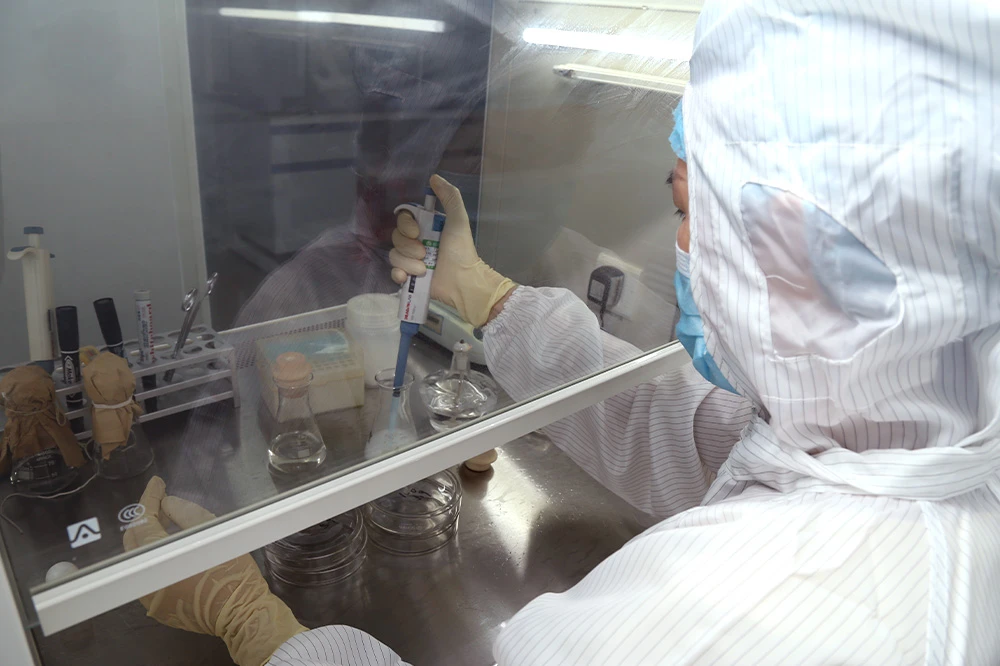
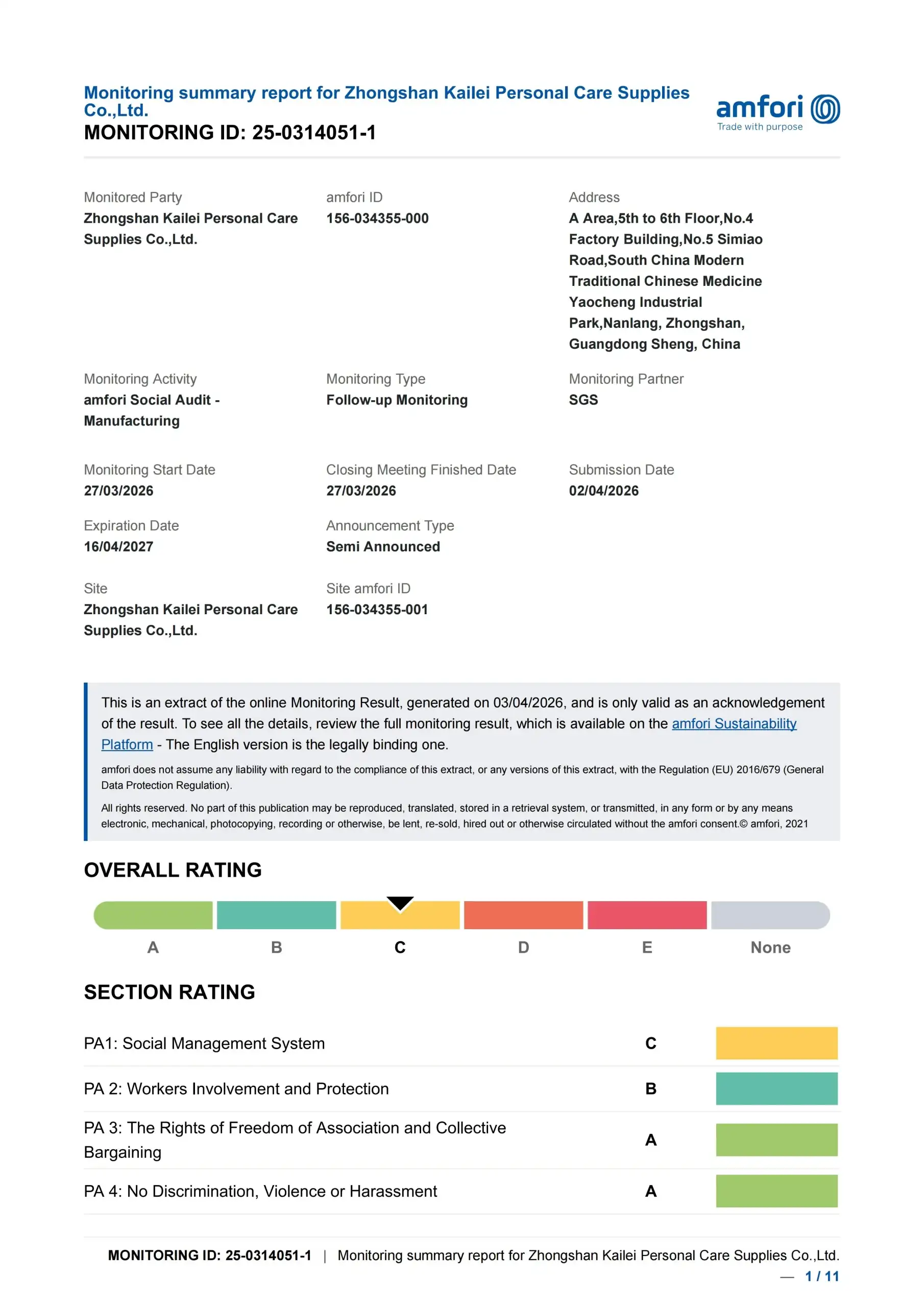
Skincraftlab is a skincare OEM/ODM contract manufacturer based in Zhongshan, Guangdong, China, operating since 2007 and serving 2,000+ brands across 30+ countries. Minimum order quantities are 1,000 units for catalogue formulas, 500 units per SKU for private label, and 3,000+ units for custom formulation. Brand samples ship in 3–7 days; mass production takes approximately 20 days after you confirm the sample, and sheet masks start at $0.08–$0.35 per piece. Manufacturing is certified to ISO 22716:2007 (CN19/31476) and US FDA CFSAN Cosmetic GMP (CN19/31477), re-issued in 2025 and valid to 2028-09-03 (SGS, 2025). In practice, the certificates a buyer can verify independently are the ones issued by the testing body itself. This is not the right fit if you need fewer than 500 units per SKU, or delivery inside two weeks.
| Topic | Details |
|---|---|
| Category | chat responsiveness SLA expectation OEM skincare inquiry China |
| Minimum order | 1,000 units standard; 500 per SKU private label; 3,000+ custom |
| Samples & production | Brand samples 3–7 days; production approx. 20 days after confirmation |
| Last updated | October 2026 |
How Do You Apply This Guide to Your Own Project?
- 1Step 1: match the format to your unit cost — for example, sheet masks run $0.08–$0.35 per piece at 1,000 units, while serums run $1.50–$5.00 per bottle.
- 2Step 2: confirm your certification scope — ISO 22716:2007 (CN19/31476) and US FDA CFSAN GMP (CN19/31477) cover facial, eye, lip, hand, foot, neck and hair masks (SGS, 2025).
- 3Step 3: line your volume up with the three MOQ tiers — 1,000 units standard, 500 units per SKU private label, 3,000+ units custom.
- 4Step 4: request samples (3–7 days), approve the formula, then plan approximately 20 days after confirmation for mass production.
- 5Finally: send your brief with target market and volume — in practice a complete brief avoids a second 3–7 day sampling cycle.
Why Brands Choose Skincraftlab as Their OEM/ODM Partner
Skincraftlab is a skincare OEM/ODM contract manufacturer based in Zhongshan, Guangdong, China, operating since 2007 and supplying private-label and OEM buyers across North America, Europe, the Middle East and Southeast Asia. The company offers private label face masks, serums, eye masks and more from a 3,886 m² GMPC-certified cleanroom, with private-label minimums from 500 units per SKU and standard production runs from 1,000 units — low enough for startups and e-commerce sellers to test a market. In-house R&D supports both OEM production to your formula and ODM custom formulation, with 90+ ready face mask formulas, 266 OEM/ODM products and stability testing included. Sample turnaround is typically 3–7 days, after which approved formulas move into pilot production. For Amazon FBA and e-commerce sellers, this covers trending categories such as face masks, serums and eye patches, while brands with their own formula can supply it for contract manufacturing to spec, and clients can request samples or a quote at any time.
Frequently Asked Questions
What is a realistic chat responsiveness SLA expectation for an OEM skincare inquiry from China?
What hydrocolloid material sourcing spec should I require from a China OEM for pimple patches?
What is the hydrocolloid vs hydrogel pimple patch manufacturing cost comparison for an OEM run?
Does chat responsiveness actually predict manufacturing quality?
How do I lock an SLA into the OEM contract, not just chat?
What MOQ should I expect for a private-label pimple patch program?
Related Posts
Chat SLA for OEM Skincare Inquiries in China: Pimple Patch Sourcing
Real chat SLA benchmarks for OEM skincare inquiries in China, plus hydrocolloid vs hydrogel pimple patch material specs and per-unit cost gaps for 2026 buyers.

Chat Responsiveness SLA Expectation OEM Skincare Inquiry China
What a realistic chat SLA looks like on a China OEM skincare inquiry, plus hydrocolloid pimple patch sourcing specs and cost math.
Chat SLA for OEM Inquiries: Pimple Patch Material Specs
What a realistic chat responsiveness SLA looks like for OEM skincare inquiries in China — plus hydrocolloid vs hydrogel pimple patch sourcing specs and costs.
Related Products

Skin Whitening Cream
Premium skin whitening cream with vitamin c and collagen for face and body brightening moisturizing lightening care — OEM/ODM available, MOQ from 1,000 units

Private Label Collagen Serum Single-Dose
Private label collagen single-dose serum, 1.2 ml vials, 10 or 30 pcs per box, 1,000 boxes MOQ

Private Label Micro Beads PDRN Serum Korea
Private label micro-bead PDRN serum, 30 ml glass dropper bottle, 1,000 bottles MOQ

Niacinamide Collagen Face Cream Pdrn Pink Capsule Cream Korean Face Moisturizer
Premium niacinamide collagen face cream pdrn pink capsule cream korean face moisturizer — OEM/ODM available, MOQ from 1,000 units