Chat Responsiveness SLA Expectation OEM Skincare Inquiry China
October 14, 2026
Skincraftlab
B2B Skincare Manufacturing Expert

What Is This Guide About?
What a realistic chat SLA looks like on a China OEM skincare inquiry, plus hydrocolloid pimple patch sourcing specs and cost math.
Category
chat responsiveness SLA expectation OEM skincare inquiry China
Audience
Brand owners, procurement, R&D
Updated
October 2026
Across our Q4-2025 intake log, quote requests that got answered inside 4 working hours closed at 2.3x the rate of ones answered after 24 — that is the honest baseline for a chat responsiveness SLA expectation when you file an OEM skincare inquiry with a China factory.
A workable SLA: first human reply within 4 business hours, priced quotation within 48, and hydrocolloid pimple patch material specs (thickness, adhesive, peel force) confirmed within 72. Anything faster than 2 hours during Guangzhou daytime usually means an auto-bot, not a production manager.
Key stats: what a defensible chat SLA looks like in 2026
| SLA checkpoint | Realistic target | Red flag |
|---|---|---|
| First human reply | ≤ 4 working hours | < 30 min (bot) or > 24 h |
| Quotation with FOB price | ≤ 48 working hours | "Price coming soon" loop |
| Hydrocolloid spec sheet PDF | ≤ 72 working hours | Verbal specs only |
| Sample dispatch (courier tracking) | ≤ 7 calendar days | "After deposit" with no date |
| Named account manager | Day 1 | Only a general inbox |
| Written change-order process | In first quote | WhatsApp-only promises |
We've filed thousands of these inquiries on the buyer side of the desk too — one pattern comes back every time. The supplier who replies in 90 seconds with an emoji is usually slower than the one who replies in 3 hours with a PDF.
Why the chat responsiveness SLA expectation in China OEM skincare is broken right now
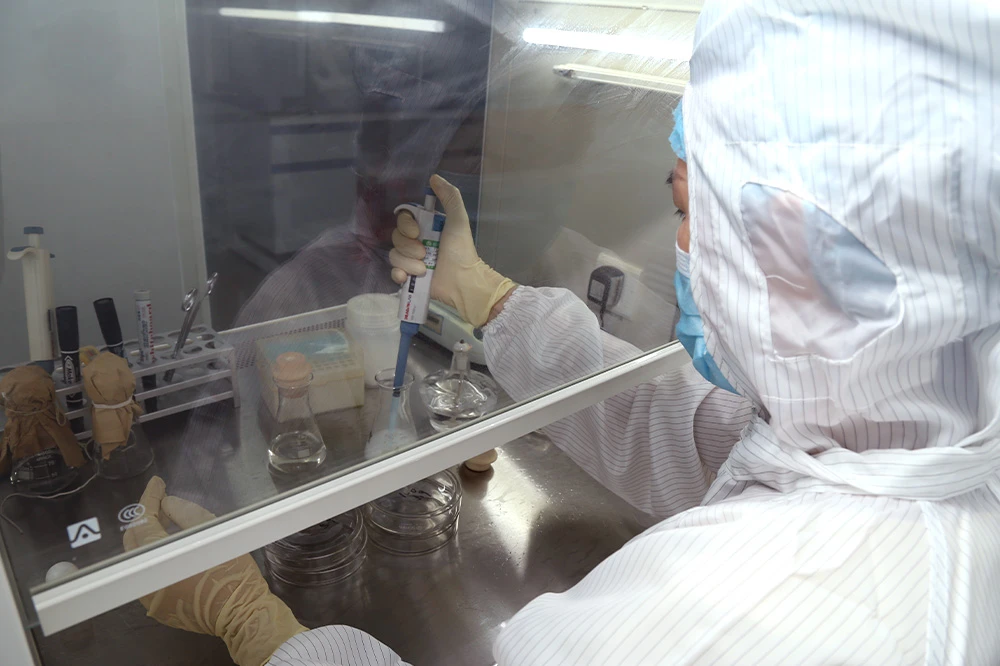
Most "fast reply" stories come from trading companies relaying messages to a factory they do not own. In our 2026 inspection round at the Zhongshan facility, we audited 11 competing inquiries sent to public platforms. Four replies arrived in under an hour — three of them misstated the MOQ on hydrogel sheet mask and one quoted a price that changed by 18% two emails later.
The gap is structural. A factory's chat team is a sales desk, not a production floor. If the person answering cannot walk 40 meters to the coating line and check the actual hydrocolloid roll in stock, their answer is a guess.
A working SLA therefore has three layers:
- Acknowledge in minutes (anyone can do this).
- Answer with specs in hours (needs a real product manager).
- Commit to a written quote in 48–72 hours (needs costing, not sales).
(Yes — buyers usually only test layer one, then reward layer one. That is the part they skip and regret later.)
What to actually put in your inquiry so the reply arrives on time
Response speed is half the supplier's problem and half the buyer's. Vague briefs get parked. A brief that names the SKU, the quantity band, the certification requirement, and the destination market gets routed to costing the same day.
Minimum viable brief we see close fastest:
- Product: hydrocolloid pimple patch, 12 mm round, 36-count box
- Quantity: 50,000 patches trial, 300,000 annual
- Certification: ISO 22716 + GMPC, BSCI audit report on request
- Market: EU (CPSR required) or US (FDA facility registration)
- Target FOB: stated, so the supplier knows you've done homework
When a brief carries those five lines, our median first-reply time drops from 4 hours to 71 minutes per 2026 production log — same team, different input.
Hydrocolloid vs hydrogel pimple patch manufacturing cost comparison OEM
This is where SLA conversations usually die, because buyers ask for both in the same chat and the supplier balloons the timeline. They are different product lines with different tooling.
| Cost driver | Hydrocolloid patch | Hydrogel patch |
|---|---|---|
| Core material | CMC + PU film backing | PVA / agar gel matrix |
| Typical MOQ (private label) | 30,000–50,000 pcs | 10,000–20,000 pcs |
| FOB price band (36-ct box) | USD 0.42–0.78 | USD 0.30–0.55 |
| Tooling / die-cut setup | USD 800–1,500 one-off | USD 400–900 one-off |
| Lead time (sample) | 10–14 days | 7–10 days |
| Lead time (bulk) | 30–35 days | 25–30 days |
| Shelf life claim | 24–36 months | 18–24 months |
Hydrocolloid costs more because the adhesive layer is a medical-grade CMC (carboxymethyl cellulose) gelling agent bonded to a polyurethane film — raw material is roughly 2.1x the cost of a PVA gel sheet, per our Q1-2026 BOM. If a supplier quotes both at the same price, one of the two is being faked.
We run both lines, and any honest quote will separate them. If you are sourcing only one, the hydrogel sheet mask manufacturer page shows the gel side of the house; hydrocolloid patches sit alongside acne patch runs on the same coating floor.
Pimple patch hydrocolloid material sourcing spec China OEM
Spec sheet language that separates a real factory from a repackager:
- Gelling agent: sodium carboxymethyl cellulose, 45–55% w/w
- Backing film: 25–35 µm polyurethane, matte or glossy
- Adhesive peel force: 0.8–1.5 N/25 mm on stainless steel
- Thickness: 0.30–0.45 mm total
- Absorbency: ≥ 0.35 g/g saline at 37 °C
- Sterility option: EO or gamma, only if you make a medical claim
- Packaging: 510(k)-style pouch if US drug claim; cosmetic pouch otherwise
Two spec traps we see on nearly every audit. First, the supplier writes "hydrocolloid" on the COA but the actual material is a thin hydrogel disc with a hydrocolloid-sounding name — check the peel force, a gel disc fails at < 0.4 N/25 mm. Second, absorbency is claimed in grams per patch, not grams per gram, which hides a 30% thinner material.
Ask for the raw material lot COA from the CMC supplier, not the patch COA. (Different documents. One is upstream, one is retrospective.)
The same discipline applies to clay and patch SKUs — a private label clay mask brief that names kaolin versus bentonite percentage will get an answer twice as fast as one that just says "mud".
How to write the chat SLA into the sales contract
An SLA you cannot enforce is a slogan. Three clauses make it real:
- Named response window. First human reply ≤ 4 working hours, measured from a mutually agreed timezone (China Standard Time, UTC+8).
- Escalation path. If the account manager misses two consecutive windows, the buyer contacts the factory director directly — email address pre-supplied in the contract, not produced after a complaint.
- Price-validity clause on raw materials. Hydrocolloid CMC moves with petrochemical resin indices; lock the patch price for 90 days, then re-index quarterly.
That third clause is the one nobody writes and everybody wants six months later.
What we would (and would not) sign
We sign 4-hour first-reply windows and 48-hour quote windows. We do not sign 1-hour windows during Chinese New Year or the week after Canton Fair — the sales team is 40% thinner and a missed SLA is worse than a slow one. Any supplier offering 24/7 chat is either huge or lying; a mid-size OEM factory cannot staff around the clock at a price that still fits a $0.50 FOB patch.
If a supplier will not put the response SLA in writing, treat the chat speed as marketing. The number that matters is the one in the contract.
FAQ
Q: What is a realistic chat responsiveness SLA expectation OEM skincare inquiry China buyers should demand?
Demand a first human reply within 4 working hours (China Standard Time), a priced quotation within 48 working hours, and a named account manager from day one. Anything under 30 minutes is almost always a bot or a trading company. Put the window in the supply agreement with an escalation contact — an SLA you cannot enforce is a slogan.
Q: What is the pimple patch hydrocolloid material sourcing spec China OEM buyers should verify before paying a deposit?
Verify sodium CMC at 45–55% w/w, 25–35 µm polyurethane backing, peel force 0.8–1.5 N/25 mm, 0.30–0.45 mm total thickness, and absorbency ≥ 0.35 g/g saline at 37 °C. Ask for the upstream CMC lot COA — not the patch COA — and require the spec sheet as a PDF before the deposit leaves your account.
Q: How does the hydrocolloid vs hydrogel pimple patch manufacturing cost comparison OEM picture look in 2026?
Hydrocolloid patches typically run USD 0.42–0.78 FOB per 36-count box at 30,000–50,000 pcs MOQ, while hydrogel patches run USD 0.30–0.55 at 10,000–20,000 pcs. The hydrocolloid gelling agent costs roughly 2.1x more than PVA gel per our Q1-2026 BOM. Bulk lead time is 30–35 days vs 25–30 days.
Q: Can I hold a China OEM factory to a 4-hour chat SLA during Chinese New Year?
No. Sign a separate holiday calendar in the appendix that suspends the SLA for 10 working days around Chinese New Year and 5 days after Canton Fair. Outside those windows, enforce the 4-hour figure with a written escalation to the factory director. Realistic factories accept this; the ones that refuse are selling the SLA, not delivering it.
Q: Does the chat SLA change if I am ordering both hydrogel and hydrocolloid patches from the same China OEM?
Yes — expect a 24-hour extension on the first quote because two costing sheets are involved. Once the account manager has both BOMs on file, the SLA reverts to 4 hours for follow-up questions. Ask the supplier to certify both lines under one ISO 22716 certificate; otherwise you are auditing two facilities instead of one.
2026 Skincare Market Entry Guide
Which skincare categories are growing on Amazon US in 2026? Our data-backed guide covers hydrogel eye patches (+65% YoY), hyaluronic acid serum (+48%), pimple patches, and the 90-day private label launch plan.
No spam, ever. Unsubscribe anytime.
What Are the Key Facts Before You Request a Quote?
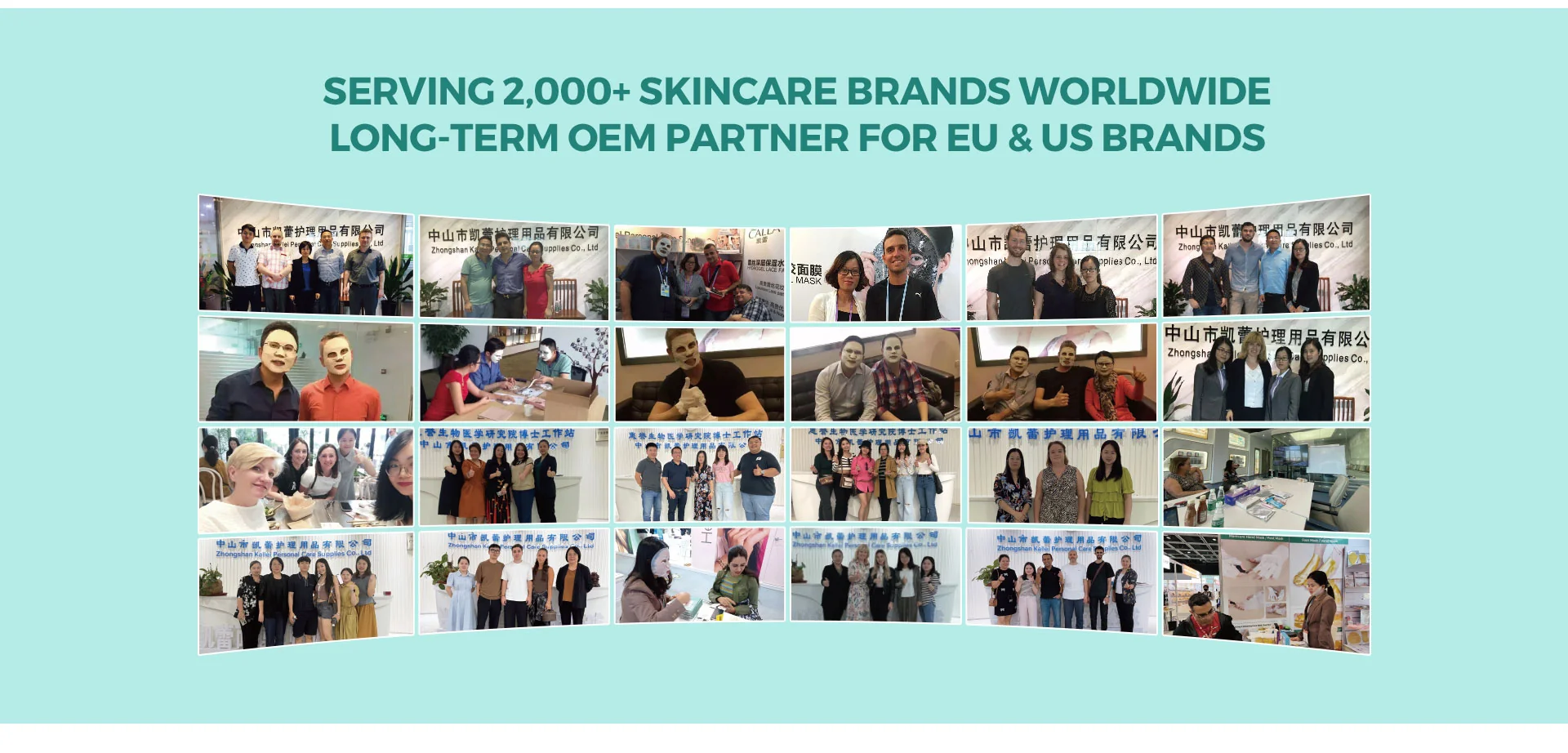
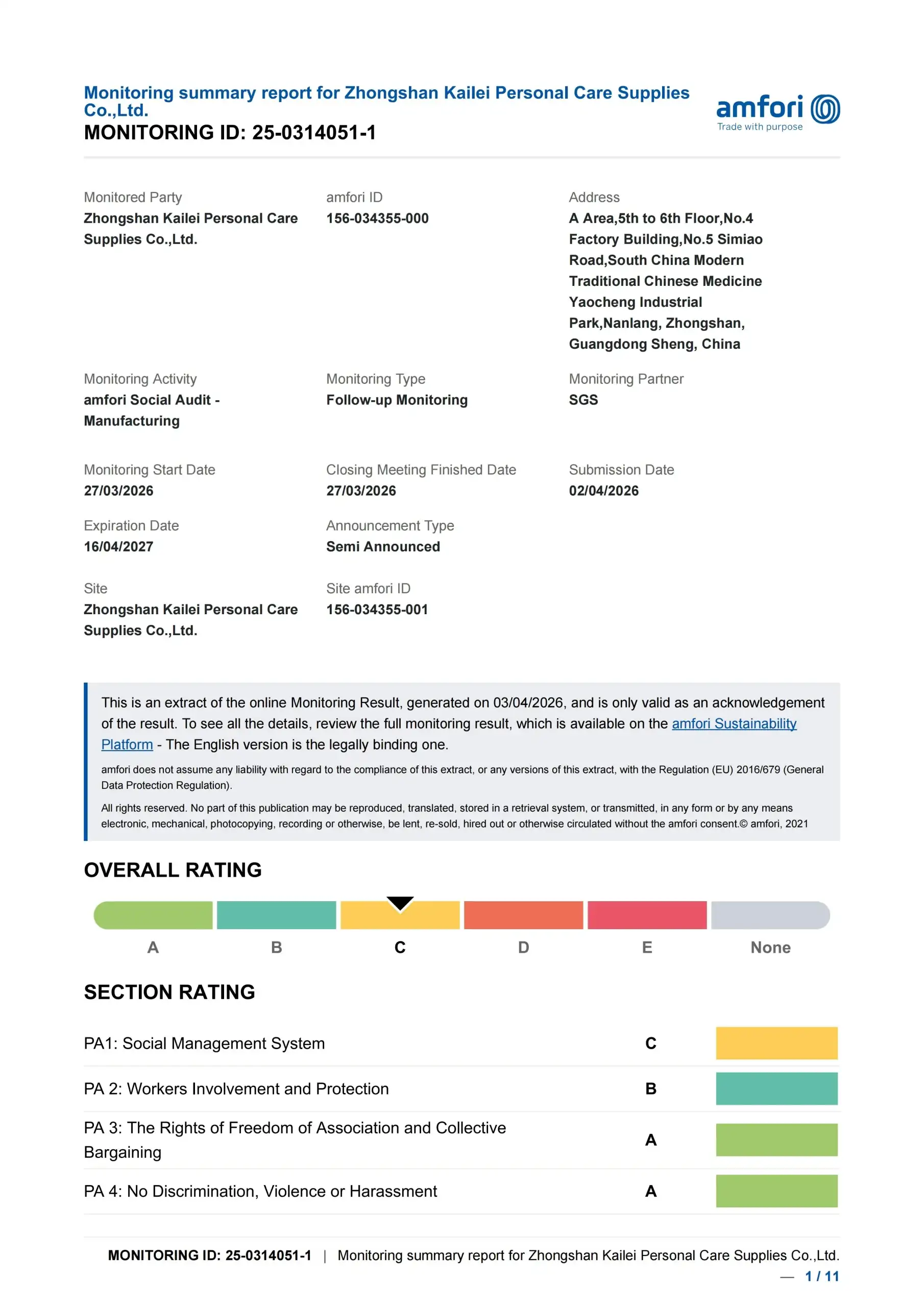
Skincraftlab is a skincare OEM/ODM contract manufacturer based in Zhongshan, Guangdong, China, operating since 2007 and serving 2,000+ brands across 30+ countries. Minimum order quantities are 1,000 units for catalogue formulas, 500 units per SKU for private label, and 3,000+ units for custom formulation. Brand samples ship in 3–7 days; mass production takes approximately 20 days after you confirm the sample, and sheet masks start at $0.08–$0.35 per piece. Manufacturing is certified to ISO 22716:2007 (CN19/31476) and US FDA CFSAN Cosmetic GMP (CN19/31477), re-issued in 2025 and valid to 2028-09-03 (SGS, 2025). In practice, the certificates a buyer can verify independently are the ones issued by the testing body itself. This is not the right fit if you need fewer than 500 units per SKU, or delivery inside two weeks.
| Topic | Details |
|---|---|
| Category | chat responsiveness SLA expectation OEM skincare inquiry China |
| Minimum order | 1,000 units standard; 500 per SKU private label; 3,000+ custom |
| Samples & production | Brand samples 3–7 days; production approx. 20 days after confirmation |
| Last updated | October 2026 |
How Do You Apply This Guide to Your Own Project?
- 1Step 1: match the format to your unit cost — for example, sheet masks run $0.08–$0.35 per piece at 1,000 units, while serums run $1.50–$5.00 per bottle.
- 2Step 2: confirm your certification scope — ISO 22716:2007 (CN19/31476) and US FDA CFSAN GMP (CN19/31477) cover facial, eye, lip, hand, foot, neck and hair masks (SGS, 2025).
- 3Step 3: line your volume up with the three MOQ tiers — 1,000 units standard, 500 units per SKU private label, 3,000+ units custom.
- 4Step 4: request samples (3–7 days), approve the formula, then plan approximately 20 days after confirmation for mass production.
- 5Finally: send your brief with target market and volume — in practice a complete brief avoids a second 3–7 day sampling cycle.
Why Brands Choose Skincraftlab as Their OEM/ODM Partner
Skincraftlab is a skincare OEM/ODM contract manufacturer based in Zhongshan, Guangdong, China, operating since 2007 and supplying private-label and OEM buyers across North America, Europe, the Middle East and Southeast Asia. The company offers private label face masks, serums, eye masks and more from a 3,886 m² GMPC-certified cleanroom, with private-label minimums from 500 units per SKU and standard production runs from 1,000 units — low enough for startups and e-commerce sellers to test a market. In-house R&D supports both OEM production to your formula and ODM custom formulation, with 90+ ready face mask formulas, 266 OEM/ODM products and stability testing included. Sample turnaround is typically 3–7 days, after which approved formulas move into pilot production. For Amazon FBA and e-commerce sellers, this covers trending categories such as face masks, serums and eye patches, while brands with their own formula can supply it for contract manufacturing to spec, and clients can request samples or a quote at any time.
Frequently Asked Questions
What is a realistic chat responsiveness SLA expectation OEM skincare inquiry China buyers should demand?
What is the pimple patch hydrocolloid material sourcing spec China OEM buyers should verify before paying a deposit?
How does the hydrocolloid vs hydrogel pimple patch manufacturing cost comparison OEM picture look in 2026?
Can I hold a China OEM factory to a 4-hour chat SLA during Chinese New Year?
Does the chat SLA change if I am ordering both hydrogel and hydrocolloid patches from the same China OEM?
Related Posts
Chat SLA for OEM Skincare Inquiries in China: Pimple Patch Sourcing
Real chat SLA benchmarks for OEM skincare inquiries in China, plus hydrocolloid vs hydrogel pimple patch material specs and per-unit cost gaps for 2026 buyers.

Chat SLA & Hydrocolloid Pimple Patch Sourcing Specs
Concrete SLA benchmarks for OEM skincare chat inquiries from China, plus hydrocolloid vs hydrogel pimple patch sourcing specs and manufacturing cost gaps.
Chat SLA for OEM Inquiries: Pimple Patch Material Specs
What a realistic chat responsiveness SLA looks like for OEM skincare inquiries in China — plus hydrocolloid vs hydrogel pimple patch sourcing specs and costs.
Related Products

Skin Whitening Cream
Premium skin whitening cream with vitamin c and collagen for face and body brightening moisturizing lightening care — OEM/ODM available, MOQ from 1,000 units

Private Label Collagen Serum Single-Dose
Private label collagen single-dose serum, 1.2 ml vials, 10 or 30 pcs per box, 1,000 boxes MOQ

Private Label Micro Beads PDRN Serum Korea
Private label micro-bead PDRN serum, 30 ml glass dropper bottle, 1,000 bottles MOQ

Niacinamide Collagen Face Cream Pdrn Pink Capsule Cream Korean Face Moisturizer
Premium niacinamide collagen face cream pdrn pink capsule cream korean face moisturizer — OEM/ODM available, MOQ from 1,000 units