FDA Cosmetic Facility Registration: China Pimple Patch OEM
September 18, 2026
Skincraftlab
B2B Skincare Manufacturing Expert

What Is This Guide About?
How FDA cosmetic facility registration works when you private-label pimple patches at a China factory — device vs. cosmetic routes, FEI numbers, and what to verify.
Category
FDA cosmetic facility registration China manufacturer pimple patch private label
Audience
Brand owners, procurement, R&D
Updated
September 2026
If your pimple patch is a hydrocolloid dressing for covering acne, it usually enters the US as a Class I medical device, not a cosmetic — so the factory needs FDA establishment registration and device listing, not just cosmetic facility registration. A drug-based patch (salicylic acid, benzoyl peroxide) needs an NDC and a drug establishment registration instead. Get that classification wrong and your shipment sits at the port.
We ran into this in March 2026 at our Zhongshan plant, during the quarterly document audit. A buyer's broker had filed a hydrocolloid patch as a cosmetic. CBP flagged it in eleven days. That single misclassification cost the buyer roughly $4,100 in demurrage and re-labelling.
Here is the short version. Hydrocolloid = device route (establishment registration + device listing). Plain beautifying patch with no drug claim = cosmetic route (facility registration, no pre-market approval). Drug-infused patch = drug route (NDC, drug registration, OTC monograph compliance). Pick the wrong lane and nothing else in your paperwork saves you.
| Patch type | US regulatory route | Factory registration | Pre-market step |
|---|---|---|---|
| Hydrocolloid acne patch | Class I device | Establishment registration + FEI | Device listing, 510(k)-exempt |
| Plain gel/beautifying patch | Cosmetic | Cosmetic facility registration | None |
| Salicylic acid patch (0.5-2%) | OTC drug | Drug establishment registration | NDC + OTC monograph |
| Benzoyl peroxide patch | OTC drug | Drug establishment registration | NDC + monograph |
| Microneedle patch | Class I/II device | Establishment registration + FEI | Listing; some 510(k) |
Note the FEI number row — that is the one document buyers forget to request. It is the FDA-assigned Facility Establishment Identifier that ties the actual production line to the registration. A certificate of registration without an FEI is a piece of paper, not proof.
Which route does your pimple patch actually take?
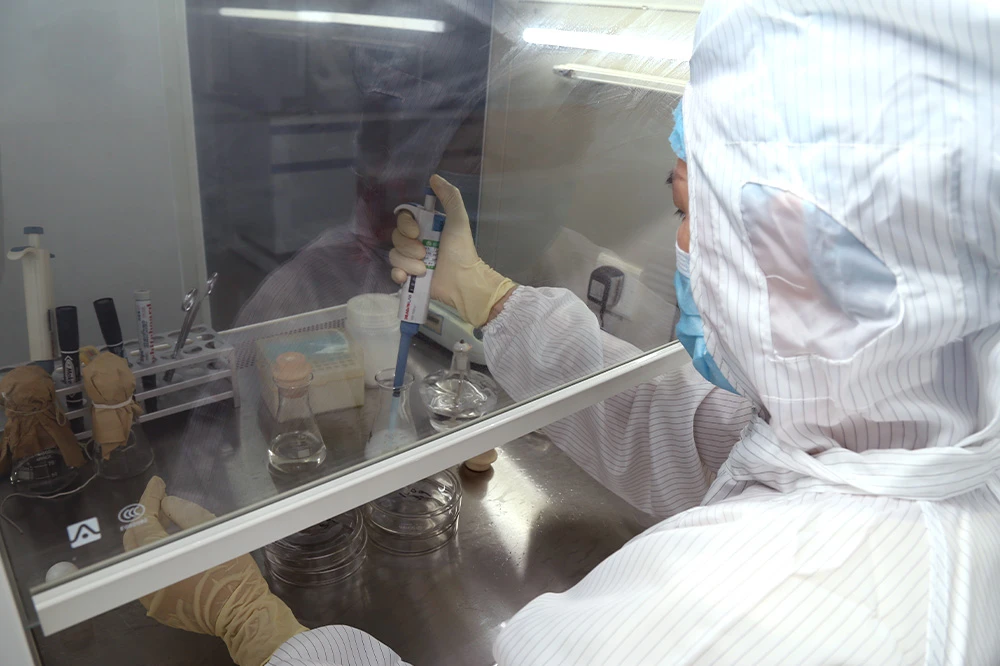
Classification is set by intended use, not by what the factory calls it. If your marketing copy says "absorbs pus," "heals acne," "reduces inflammation," or "treats breakouts," you are claiming a medical purpose. Covering and concealing is cosmetic. Treating is a device or a drug.
FDA does not pre-approve the classification. You self-classify and you carry the risk. We have seen three buyer-side misclassifications in the last 14 months — two hydrocolloid patches filed as cosmetics (both held), one salicylic patch filed as a device (sent back for an NDC).
(Yes, the FDA will let you file it wrong. They just won't let it clear.)
The practical test: strip your Amazon listing and your packaging of every claim word. What is left? If you sell a patch that covers a blemish and hides it, cosmetic. If it draws fluid out of a wound or pimple, device. If it delivers an active drug, drug.
For a deep dive on how the hydrocolloid matrix behaves in production and why it drives the classification, see our hydrocolloid material spec breakdown.
FDA cosmetic facility registration vs. device registration — the actual paperwork
This is where most RFQs fall apart. Buyers ask for "FDA registration" without specifying which one, and factories answer with whatever certificate they already have on the wall.
For cosmetic facility registration (the VCRP-adjacent route), the factory self-registers its establishment with FDA. No fee, no FDA inspection for cosmetics. The registration is voluntary but buyers treat it as a baseline.
For device establishment registration, the factory must register annually (between October 1 and December 31) and pay the FDA establishment registration fee — for FY2026 that fee is $9,280 for a establishment registration, plus $1,162 per device listing. This is real money. A factory that claims device registration but cannot show you the fee receipt is not registered.
| Registration type | Annual FDA fee (FY2026) | Factory obligation | Buyer-verifiable document |
|---|---|---|---|
| Cosmetic facility registration | $0 | Self-register | Registration confirmation |
| Device establishment registration | $9,280 | Register + renew annually | Registration + FEI + fee receipt |
| Device listing | $1,162 per listing | List each device | Listing number |
| Drug establishment registration | $31,740 | Register + site | Registration + NDC |
The device fee is the single best fraud filter. A small factory selling pimple patches at a $0.06 unit FOB is not paying $9,280 a year unless it is shipping real US device volume. Ask for the fee receipt. Not the certificate — the receipt.
What to demand before you sign an OEM agreement
We keep a one-page checklist we send to any buyer asking FDA questions. Here is the working version.
- FEI number for the exact production line. Not the corporate entity — the line.
- Device listing number matching your product code.
- Annual registration confirmation dated within the last 12 months.
- Fee receipt for the current fiscal year.
- Quality agreement naming who holds the regulatory role (US agent, importer of record).
- Copy of the FDA US agent appointment letter.
Item 6 catches people. A foreign device establishment must appoint a US agent. If there is no agent letter, you — the brand owner — become the de facto importer of record, and you inherit the liability.
We have seen brands discover this at the CBP hold stage. Expensive and slow.
For private label programs at our facility, we supply pimple patch private label configurations with hydrocolloid, hydrogel, and microneedle formats under one quality system. The device route applies across all three.
Cosmetic facility registration vs. the cosmetic VCRP — a common confusion
Buyers sometimes ask for "VCRP registration." VCRP (Voluntary Cosmetic Registration Program) was the voluntary cosmetic facility and product reporting system. Under MoCRA (Modernization of Cosmetics Regulation Act, effective 2023-2024), cosmetic facility registration became mandatory for facilities producing cosmetics for US distribution. The VCRP program itself was sunset and replaced by the new MoCRA registration portal.
So: for a cosmetic-route patch, the factory now files a mandatory MoCRA facility registration, not a VCRP entry. Same concept, new legal teeth.
For device-route patches, MoCRA does not apply. You stay on the device track.
| Concept | Old regime | Current regime (2026) |
|---|---|---|
| Cosmetic facility registration | VCRP (voluntary) | MoCRA (mandatory) |
| Device establishment | FDA device registration (mandatory) | Same, with FY2026 fees |
| Product listing | VCRP product filing | MoCRA product listing |
| Responsible person | Not required | Required in US |
Note the "responsible person" row. Under MoCRA a US-based responsible person must be named. For a China-manufactured cosmetic patch, that is typically the brand owner or the importer. Confirm this before launch — one more document that decides who gets the FDA letter.
How to verify registration in five minutes
You do not need a consultant to check the basics.
- Cosmetic: ask the factory for the MoCRA registration confirmation PDF and the facility address. Match the address to the contract manufacturing site.
- Device: go to the FDA device registration and listing database (the public "Establishment Registration & Device Listing" search). Enter the FEI or the establishment name. If it does not appear, the factory is not registered — full stop.
We have had buyers do this on a call with us. It takes four minutes. Every factory should be able to survive that test.
Cost and lead-time impact of getting this right
Compliance paperwork adds to the OEM timeline. Here is what we see in our 2026 production log for US-bound pimple patch runs.
| Stage | Typical duration | Notes |
|---|---|---|
| Classification review | 3-7 days | Buyer + factory legal |
| Device listing (new product) | 5-10 business days | Requires FEI first |
| US agent appointment | 5-7 days | If not already in place |
| Formulation + sample approval | 14-21 days | Hydrocolloid is a stock matrix |
| Bulk production | 21-35 days | MOQ 5,000 units per SKU |
| FOB Shenzhen/Yantian | 2-4 days | Standard |
MOQ on hydrocolloid pimple patches at our facility runs 5,000 units per SKU, 20,000 across a program. FOB pricing sits $0.055-$0.09 per patch depending on size, adhesive grade, and packaging — the exact number depends on the FEI-registered line you load into. Getting the classification settled before you ask for the quote saves a full quote round, typically 6-9 days.
FAQ
Q: Does a China manufacturer of private-label pimple patches need FDA cosmetic facility registration?
It depends on the patch. If the product is a hydrocolloid dressing intended to cover and draw fluid from acne, FDA treats it as a Class I medical device, so the factory needs device establishment registration and a device listing — not cosmetic facility registration. If the patch makes no medical claim and only conceals blemishes, it is a cosmetic and the factory files a MoCRA cosmetic facility registration instead. Drug-infused patches require drug establishment registration and an NDC.
Q: What is an FEI number and why should I ask for it in a pimple patch private label deal?
The FEI (Facility Establishment Identifier) is the FDA-assigned number tied to a specific registered production facility. A certificate of registration without an FEI does not prove the line making your patches is registered. When you place a pimple patch private label order with a China manufacturer, request the FEI for the exact line, and verify it in the FDA public registration database before the PO is issued.
Q: How much does FDA device establishment registration cost in 2026 for a China pimple patch manufacturer?
The FY2026 FDA establishment registration fee is $9,280, plus $1,162 per device listing. These fees renew annually between October 1 and December 31. If a factory quotes you very low FOB pricing on pimple patches and cannot show a fee receipt for the current fiscal year, treat the device registration claim as unverified.
Q: Who is the importer of record for a private label pimple patch shipped from China?
Typically the US brand owner or a designated US agent becomes the importer of record. A foreign device establishment must appoint a US agent, and that appointment letter is a document you should request during supplier qualification. Without it, the brand owner inherits the compliance liability, including any CBP holds or FDA warning letters.
Q: Do microneedle pimple patches need a 510(k) before US launch?
Most Class I microneedle patches are 510(k)-exempt when no drug is delivered and no structure-function claim crosses into a higher class. Microneedles that deliver actives, penetrate to a claimed depth for therapeutic effect, or combine with a drug all require a 510(k) and the factory needs prior FDA clearance. Confirm the exact claim set with the factory before you commit to a mold or a die-cut.
Q: How long does it take to add FDA device registration to an existing China pimple patch manufacturer?
The factory must first obtain an FEI and pay the annual fee, then list the specific device. Realistically 2-4 weeks if the facility has previously registered, and 6-10 weeks for a first-time device registrant. Build this into your launch schedule — it is a real critical-path item, not a formality.
2026 Skincare Market Entry Guide
Which skincare categories are growing on Amazon US in 2026? Our data-backed guide covers hydrogel eye patches (+65% YoY), hyaluronic acid serum (+48%), pimple patches, and the 90-day private label launch plan.
No spam, ever. Unsubscribe anytime.
What Are the Key Facts Before You Request a Quote?
Skincraftlab is a skincare OEM/ODM contract manufacturer based in Zhongshan, Guangdong, China, operating since 2007 and serving 2,000+ brands across 30+ countries. Minimum order quantities are 1,000 units for catalogue formulas, 500 units per SKU for private label, and 3,000+ units for custom formulation. Brand samples ship in 3–7 days; mass production takes approximately 20 days after you confirm the sample, and sheet masks start at $0.08–$0.35 per piece. Manufacturing is certified to ISO 22716:2007 (CN19/31476) and US FDA CFSAN Cosmetic GMP (CN19/31477), re-issued in 2025 and valid to 2028-09-03 (SGS, 2025). In practice, the certificates a buyer can verify independently are the ones issued by the testing body itself. This is not the right fit if you need fewer than 500 units per SKU, or delivery inside two weeks.
| Topic | Details |
|---|---|
| Category | FDA cosmetic facility registration China manufacturer pimple patch private label |
| Minimum order | 1,000 units standard; 500 per SKU private label; 3,000+ custom |
| Samples & production | Brand samples 3–7 days; production approx. 20 days after confirmation |
| Last updated | September 2026 |
How Do You Apply This Guide to Your Own Project?
- 1Step 1: match the format to your unit cost — for example, sheet masks run $0.08–$0.35 per piece at 1,000 units, while serums run $1.50–$5.00 per bottle.
- 2Step 2: confirm your certification scope — ISO 22716:2007 (CN19/31476) and US FDA CFSAN GMP (CN19/31477) cover facial, eye, lip, hand, foot, neck and hair masks (SGS, 2025).
- 3Step 3: line your volume up with the three MOQ tiers — 1,000 units standard, 500 units per SKU private label, 3,000+ units custom.
- 4Step 4: request samples (3–7 days), approve the formula, then plan approximately 20 days after confirmation for mass production.
- 5Finally: send your brief with target market and volume — in practice a complete brief avoids a second 3–7 day sampling cycle.
Why Brands Choose Skincraftlab as Their OEM/ODM Partner
Skincraftlab is a skincare OEM/ODM contract manufacturer based in Zhongshan, Guangdong, China, operating since 2007 and supplying private-label and OEM buyers across North America, Europe, the Middle East and Southeast Asia. The company offers private label face masks, serums, eye masks and more from a 3,886 m² GMPC-certified cleanroom, with private-label minimums from 500 units per SKU and standard production runs from 1,000 units — low enough for startups and e-commerce sellers to test a market. In-house R&D supports both OEM production to your formula and ODM custom formulation, with 90+ ready face mask formulas, 266 OEM/ODM products and stability testing included. Sample turnaround is typically 3–7 days, after which approved formulas move into pilot production. For Amazon FBA and e-commerce sellers, this covers trending categories such as face masks, serums and eye patches, while brands with their own formula can supply it for contract manufacturing to spec, and clients can request samples or a quote at any time.
Frequently Asked Questions
Does a China manufacturer of private-label pimple patches need FDA cosmetic facility registration?
What is an FEI number and why should I ask for it in a pimple patch private label deal?
How much does FDA device establishment registration cost in 2026 for a China pimple patch manufacturer?
Who is the importer of record for a private label pimple patch shipped from China?
Do microneedle pimple patches need a 510(k) before US launch?
How long does it take to add FDA device registration to an existing China pimple patch manufacturer?
Related Posts

PDRN Serum OEM China: 2% vs 0.5% Salmon DNA Specs
What 2% vs 0.5% PDRN salmon DNA really means in an OEM spec sheet, plus rolling forecast terms for 500,000 pimple patches and hydrogel under-eye patch MOQ/FOB math.

Chat Responsiveness SLA for OEM Skincare Inquiries in China
What a realistic chat responsiveness SLA looks like for OEM skincare inquiries in China — plus hydrocolloid vs hydrogel pimple patch sourcing specs and costs.

Pimple Patch OEM Line Capacity: 1M Units/Month Ramp-Up
A factory-floor ramp-up plan for taking a dedicated hydrocolloid coating line from pilot to 1 million pimple patch units per month in China, with real cycle times and QC gates.
Related Products

Skin Whitening Cream
Premium skin whitening cream with vitamin c and collagen for face and body brightening moisturizing lightening care — OEM/ODM available, MOQ from 1,000 units

Transparent Silicone Scar Gel Sheet for Effective Silicone Scar Sheets for Body Care
Premium logo transparent silicone scar gel sheet for effective silicone scar sheets for body care — OEM/ODM available, MOQ from 1,000 units

Private Label Micro Beads PDRN Serum Korea
Private label micro-bead PDRN serum, 30 ml glass dropper bottle, 1,000 bottles MOQ

Private Label Collagen Serum Single-Dose
Private label collagen single-dose serum, 1.2 ml vials, 10 or 30 pcs per box, 1,000 boxes MOQ