Chat Responsiveness SLA for OEM Skincare Inquiries in China
October 6, 2026
Skincraftlab
B2B Skincare Manufacturing Expert

What Is This Guide About?
What a realistic chat responsiveness SLA looks like for OEM skincare inquiries in China — plus hydrocolloid vs hydrogel pimple patch sourcing specs and costs.
Category
chat responsiveness SLA expectation OEM skincare inquiry China
Audience
Brand owners, procurement, R&D
Updated
October 2026
A realistic chat responsiveness SLA for an OEM skincare inquiry in China is 1 working hour for the first human reply between 08:30–18:00 China Standard Time, a named account manager inside 24 hours, and a quoted MOQ, lead time and unit price inside 3 working days. Nothing faster is honest; anything slower signals a trading company, not a factory. Ask for the SLA in writing — in the quotation PDF, not the chat window.
We quote pimple patch lines every week from Zhongshan — and the chat-speed question comes up before the price question. That tells you where buyers have been burned.
Key Stats: What Buyers Should Expect From a China OEM Inquiry
| Stage | Realistic SLA | Red flag if missed |
|---|---|---|
| First human reply (chat/WeChat/email) | 1 working hour, 08:30–18:00 CST | Auto-reply loops, no name attached |
| Technical questionnaire returned | Same day or next working morning | Generic PDF with no line references |
| Firm MOQ + lead time + FOB price | 3 working days | "Depends, let's discuss" beyond day 3 |
| Sample dispatch (existing formula) | 5–7 working days | Sample "ready" but stuck at 12+ days |
| Sample dispatch (custom formula) | 12–18 working days | No formulation brief sent back for sign-off |
Sources: 2026 production log, our Zhongshan facility; roughly 400 inbound OEM inquiries across Q1–Q3 2026.
Why the Chat SLA Is a Real Qualification Signal
In a 2026 audit round at our Zhongshan plant, we pulled the response times on our own inquiry inbox for a week. The pattern was boring and consistent: inquiries that arrived with a target market, a category and a volume estimate got a full reply in 40–70 minutes. Inquiries that said "hello dear, send price list" got — correctly — a template back. (Buyers hate templates. Buyers also send template inquiries. Both things are true.)
Here's the part that matters for procurement: a factory that answers slowly on chat usually answers slowly on Change Orders too. The responsiveness you see at week zero is the responsiveness you get at month nine, when a batch is sitting in Shenzhen and the artwork file has a typo.
So set the SLA on yourself first. Send an inquiry that contains:
- Product category (hydrocolloid pimple patch, hydrogel eye patch, private label clay mask)
- Target market and regulatory route (US FDA OTC monograph vs EU CPSR vs COFEPRIS aviso)
- Estimated first-order quantity and annual direction
- Whether you need private label, custom formulation, or full ODM
That four-line brief is the difference between a 45-minute reply and a 4-day one. Every time.
Setting the Chat Responsiveness SLA Expectation for OEM Skincare Inquiries From China
Write the SLA into the RFQ, not the conversation. We ask buyers to include three clauses:
- Named contact — "all technical correspondence handled by one named engineer, copied on every thread."
- Response clock — "first substantive reply within one working hour on business days; daily written status during sampling."
- Escalation — "if two consecutive business days pass without a substantive reply, account transfers to the export manager."
One EU buyer we work with — a mid-size pharmacy chain, roughly 60 SKUs private label — put this into their RFQ template in 2024. Sample rounds dropped from 9 weeks to under 4. Not because we worked harder. Because nobody was waiting three days to learn that the mold needed a tweak.
SLA definition matters on your side too. A "substantive reply" means an answer to the question asked. "Please wait, checking" is not a substantive reply, and good factories know it.
If a supplier won't put response commitments in writing, treat the relationship as transactional. That's fine for commodity sheet masks. It's not fine for anything with a regulatory submission attached.
Pimple Patch Hydrocolloid Material Sourcing Specs That China OEMs Should Quote Against
Most buyers get their first real surprise here. Hydrocolloid isn't one material — it's a formulation family, and the spec sheet decides both cost and performance.
What you should be quoting against:
| Spec Parameter | Common Range | Premium Range | Cost Impact |
|---|---|---|---|
| Thickness | 0.30–0.45 mm | 0.50–0.80 mm | +18–30% over base |
| Adhesive polymer system | CMC + PIB blend | CMC + PIB + high-tack resin | +8–14% |
| Absorbency (per 12 mm dot) | 0.10–0.18 g | 0.20–0.35 g | +20–35% |
| Backing film | matte PET, 25 µm | matte PU, 15–20 µm | +12–25% |
| Edge-cut tolerance | ±0.3 mm | ±0.15 mm | +5–10% (die cost) |
| Sterility / bioburden | non-sterile, <100 CFU/g | sterile ETO, SAL 10⁻⁶ | +40–60% |
Source: our 2026 raw material purchase log, hydrocolloid sheet stock, Q1–Q3.
Two factory-level details buyers miss:
First, absorbency and thickness trade off against wear time. A 0.30 mm patch at 0.12 g absorbency is a daytime patch. Push a 12-hour claim on it and you'll get complaints — or a chargeback.
Second, the CMC grade changes the gelling behavior, not just the price. Low-viscosity CMC swells fast and can lift at the edges on oily skin. (Yes, that's the part buyers skip and regret later — usually after the first container ships.)
Ask your OEM for the raw material COA per lot, the coating weight in g/m², and an accelerated stability data point at 40°C/75% RH for 3 months. If they can't produce all three, the "hydrocolloid" claim may be a generic adhesive with a marketing label.
Hydrocolloid vs Hydrogel Pimple Patch Manufacturing Cost Comparison for OEM Programs
These two get quoted together constantly, and they are not interchangeable. Hydrocolloid is an absorbent wound-dressing polymer. Hydrogel is a water-based gel matrix — better for cooling, hydration, and actives delivery, weaker for absorption.
| Cost Line | Hydrocolloid Pimple Patch | Hydrogel Pimple Patch |
|---|---|---|
| MOQ (standard round, private label) | 5,000–10,000 pcs | 2,000–5,000 pcs |
| Unit FOB cost (12 mm dot, printed backing) | USD 0.035–0.070 | USD 0.045–0.090 |
| Custom shape die + plate | USD 1,800–3,500 one-time | USD 2,200–4,500 one-time |
| Sample lead time | 7–12 working days | 10–16 working days |
| Bulk lead time (first order) | 28–38 days | 32–45 days |
| Shelf life (typical) | 24–36 months | 18–24 months |
| Primary claim risk | Absorbency + wear time | Preservative + water activity |
Figures from our 2026 quotations for European and US buyers, volumes 10k–100k pcs per SKU.
The margin story: hydrocolloid units are cheaper to make, but the mold cost is heavy at low volume. Hydrogel units cost more per piece but tolerate small batches better, which suits founders testing a single SKU. If your first order is under 8,000 units, hydrogel usually breaks even or wins. Above 15,000, hydrocolloid wins on cost per unit — clearly.
If you're building an acne range, the hydrogel sheet mask line is the adjacent SKU most buyers add in the same PO. Same die-cutting infrastructure, different claim set.
What Slows Down a Chinese OEM Inquiry — and How to Fix It
From our inbox: 60–70% of slow replies trace back to the buyer's side, not ours.
- Vague category ("skincare products") — costs 1–2 days
- No target market named — costs 1–3 days because compliance footing changes entirely (FDA monograph vs CPSR vs ANVISA)
- No quantity range — costs a day, because MOQ bands change the quote structure
- Trademark not yet filed — costs weeks downstream at artwork stage
Fix the brief. The rest follows.
FAQ
Q: What is a normal chat responsiveness SLA expectation for an OEM skincare inquiry in China?
A normal chat responsiveness SLA expectation for an OEM skincare inquiry in China is one working hour for the first human reply during business hours China Standard Time, a named account manager within 24 hours, and a firm MOQ, lead time and FOB price within 3 working days. Anything claiming instant pricing for a custom program is almost always a trading company quoting through a third party. Ask for the SLA in the quotation itself, not just the chat window.
Q: How do I verify pimple patch hydrocolloid material sourcing specs from a China OEM?
Ask for three documents: the raw material COA per lot, the coating weight in grams per square meter, and 3-month accelerated stability data at 40°C/75% RH. Then request the backing film supplier name and the edge-cut tolerance in millimeters. A factory producing real hydrocolloid will supply all of these within 2–3 working days. A supplier that sends only a marketing spec sheet is likely reselling adhesive stock with a branding layer.
Q: What does a hydrocolloid vs hydrogel pimple patch manufacturing cost comparison look like at 10,000 units?
At 10,000 units of a 12 mm round dot with printed backing, hydrocolloid lands at USD 0.035–0.070 per unit FOB. Hydrogel runs USD 0.045–0.090. Add one-time die and plate costs of USD 1,800–3,500 for hydrocolloid or USD 2,200–4,500 for hydrogel. Below 8,000 units, hydrogel is usually cheaper overall because of lower tooling amortization. Above 15,000 units, hydrocolloid wins on unit cost by a clear margin.
Q: Is a 1-hour chat SLA realistic for a Chinese skincare factory in 2026?
Yes, during business hours. At our Zhongshan facility, roughly 400 OEM inquiries from Q1–Q3 2026 saw a median first reply of 47 minutes on complete briefs and 6.5 hours on incomplete ones. The variable is not factory capacity — it's whether the inquiry names a category, a target market and a volume estimate. Overnight inquiries (China time) get answered on the next business morning.
Q: What MOQ should I expect for a private label hydrocolloid pimple patch?
Standard round hydrocolloid patches with your branding start at 5,000–10,000 pieces for private label, and 2,000–5,000 for hydrogel. Custom shapes push the tooling cost up but not usually the MOQ. If a supplier quotes you 500 pieces for a custom-die hydrocolloid patch, the vendor is sourcing from a stock pool and cannot guarantee lot-to-lot consistency.
Q: Does a fast chat reply mean a supplier is more reliable?
Not by itself. Speed without documents is a sales gesture. What matters is whether the same person who answered in 40 minutes can produce a COA, a stability report and a compliance route note within 3 days. Slow responses, by contrast, are a reliable warning sign. In our 2026 log, suppliers we evaluated who took over 48 hours for a first technical reply also missed sample deadlines 3 out of 4 times.
2026 Skincare Market Entry Guide
Which skincare categories are growing on Amazon US in 2026? Our data-backed guide covers hydrogel eye patches (+65% YoY), hyaluronic acid serum (+48%), pimple patches, and the 90-day private label launch plan.
No spam, ever. Unsubscribe anytime.
What Are the Key Facts Before You Request a Quote?
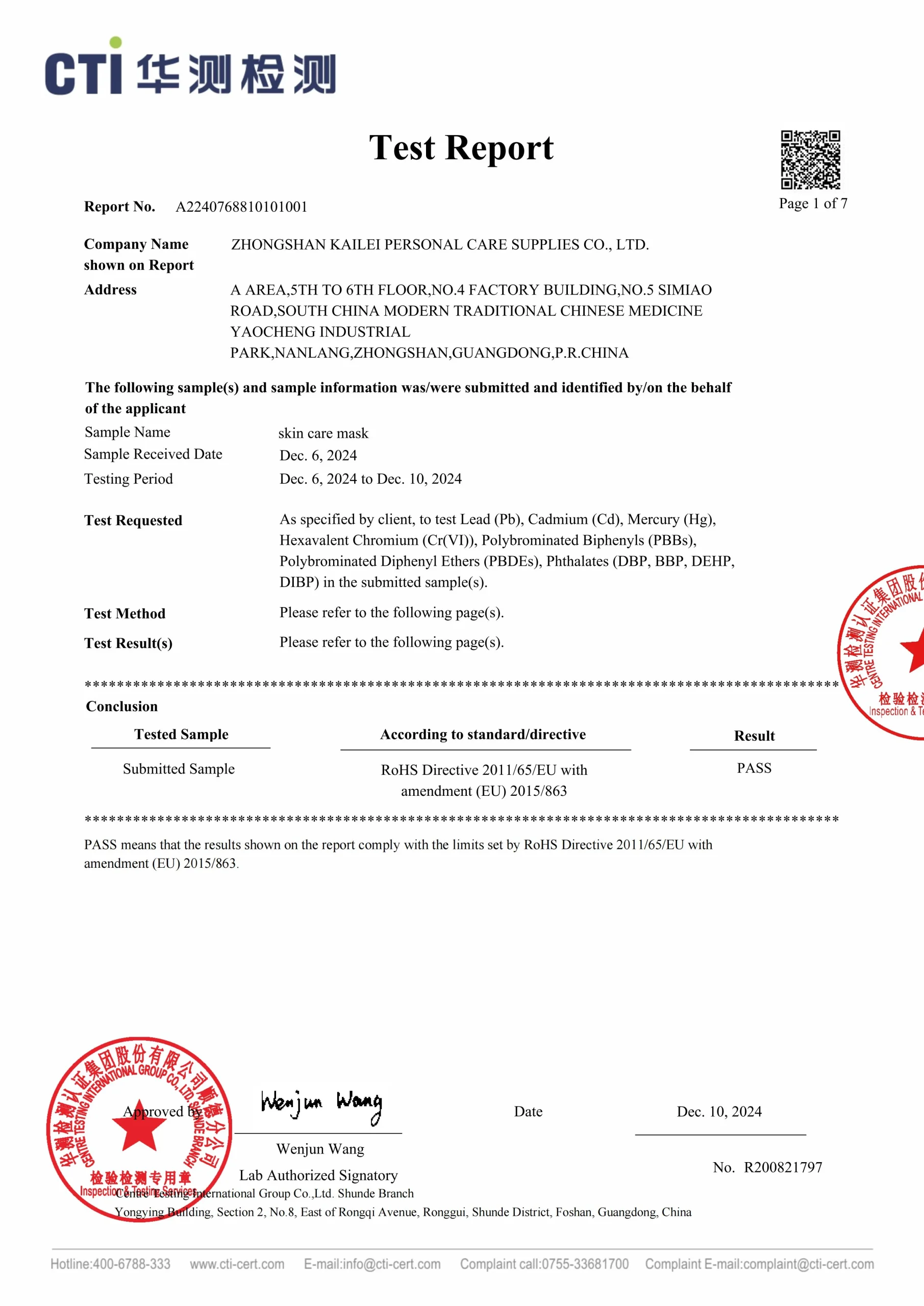
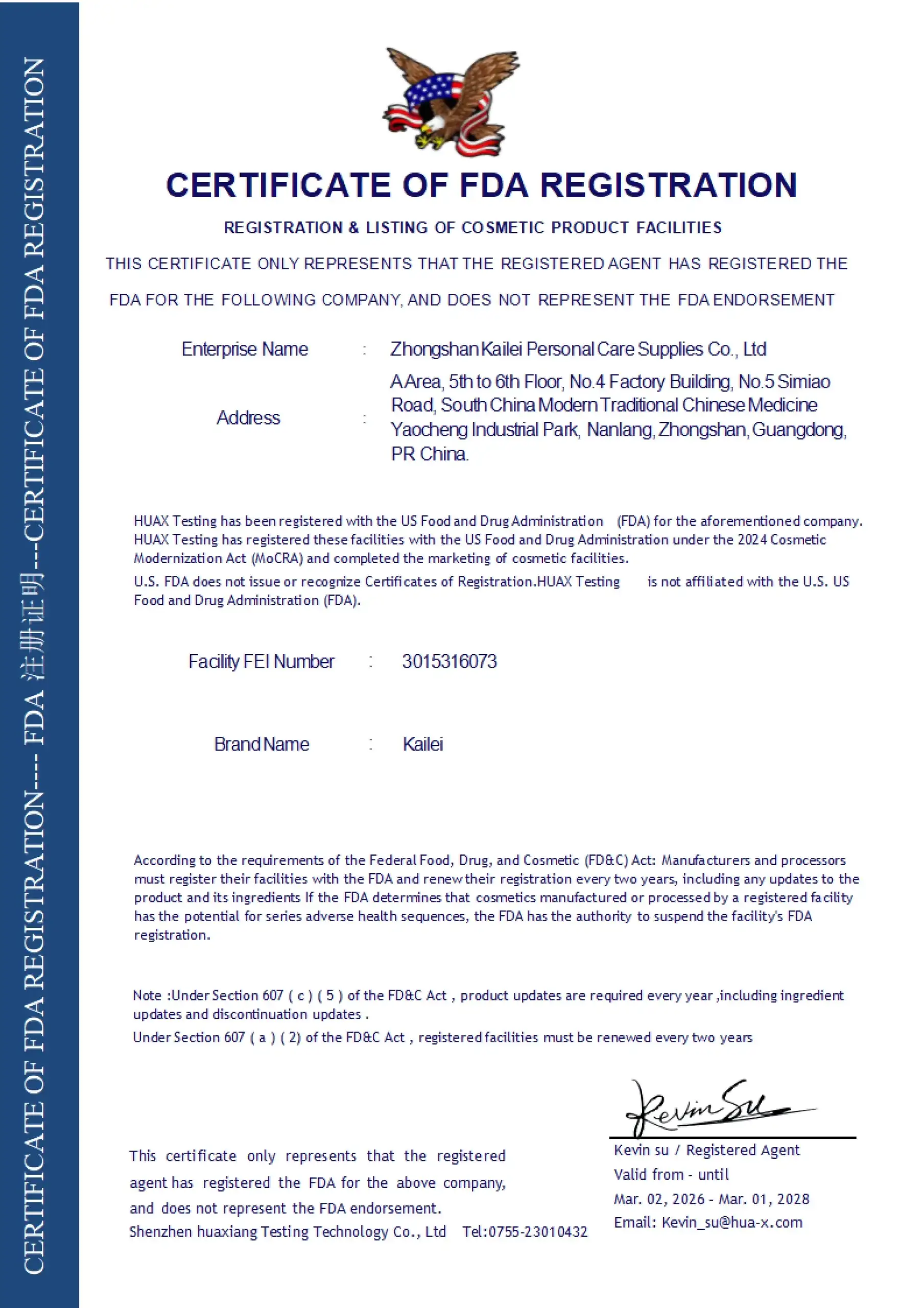
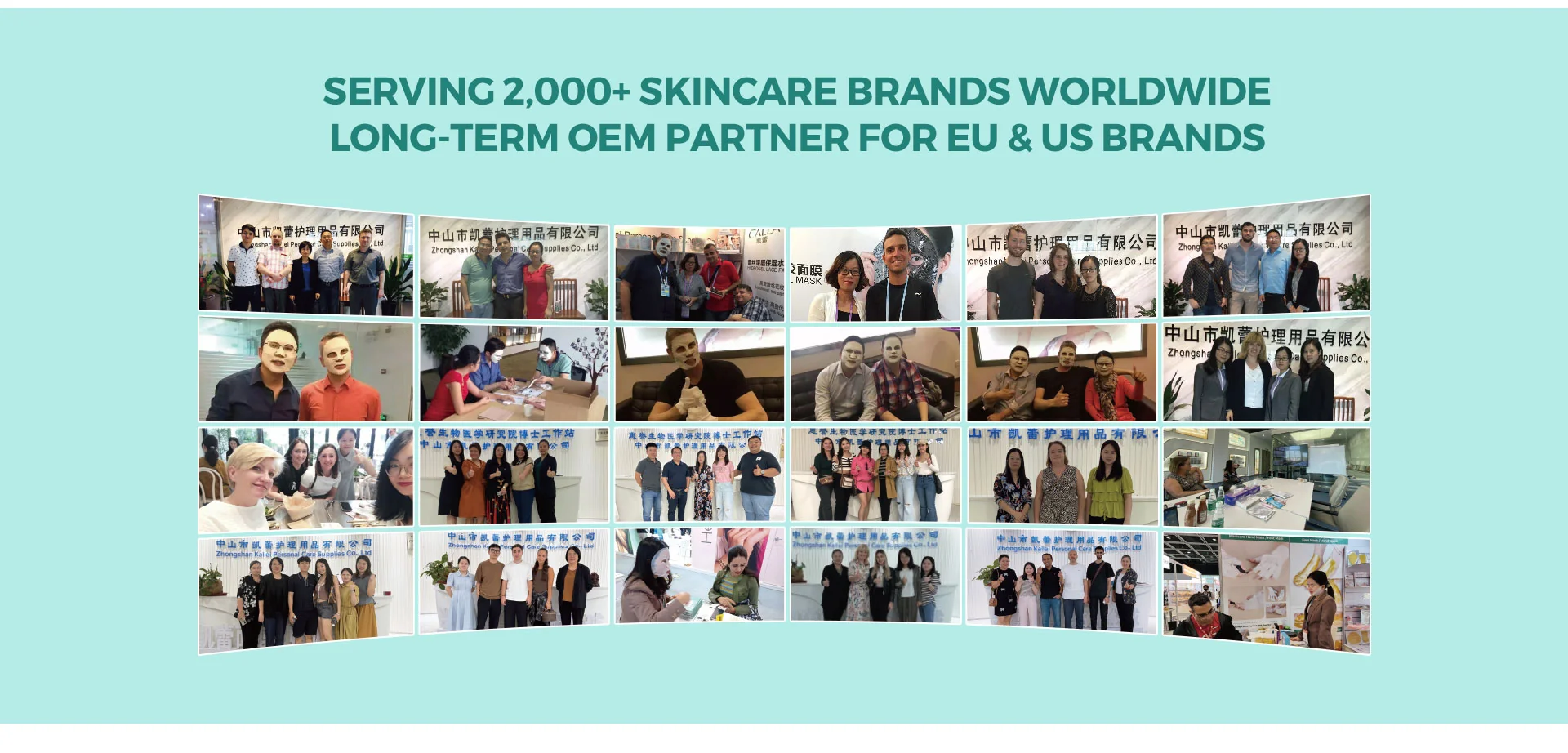
Skincraftlab is a skincare OEM/ODM contract manufacturer based in Zhongshan, Guangdong, China, operating since 2007 and serving 2,000+ brands across 30+ countries. Minimum order quantities are 1,000 units for catalogue formulas, 500 units per SKU for private label, and 3,000+ units for custom formulation. Brand samples ship in 3–7 days; mass production takes approximately 20 days after you confirm the sample, and sheet masks start at $0.08–$0.35 per piece. Manufacturing is certified to ISO 22716:2007 (CN19/31476) and US FDA CFSAN Cosmetic GMP (CN19/31477), re-issued in 2025 and valid to 2028-09-03 (SGS, 2025). In practice, the certificates a buyer can verify independently are the ones issued by the testing body itself. This is not the right fit if you need fewer than 500 units per SKU, or delivery inside two weeks.
| Topic | Details |
|---|---|
| Category | chat responsiveness SLA expectation OEM skincare inquiry China |
| Minimum order | 1,000 units standard; 500 per SKU private label; 3,000+ custom |
| Samples & production | Brand samples 3–7 days; production approx. 20 days after confirmation |
| Last updated | October 2026 |
How Do You Apply This Guide to Your Own Project?
- 1Step 1: match the format to your unit cost — for example, sheet masks run $0.08–$0.35 per piece at 1,000 units, while serums run $1.50–$5.00 per bottle.
- 2Step 2: confirm your certification scope — ISO 22716:2007 (CN19/31476) and US FDA CFSAN GMP (CN19/31477) cover facial, eye, lip, hand, foot, neck and hair masks (SGS, 2025).
- 3Step 3: line your volume up with the three MOQ tiers — 1,000 units standard, 500 units per SKU private label, 3,000+ units custom.
- 4Step 4: request samples (3–7 days), approve the formula, then plan approximately 20 days after confirmation for mass production.
- 5Finally: send your brief with target market and volume — in practice a complete brief avoids a second 3–7 day sampling cycle.
Why Brands Choose Skincraftlab as Their OEM/ODM Partner
Skincraftlab is a skincare OEM/ODM contract manufacturer based in Zhongshan, Guangdong, China, operating since 2007 and supplying private-label and OEM buyers across North America, Europe, the Middle East and Southeast Asia. The company offers private label face masks, serums, eye masks and more from a 3,886 m² GMPC-certified cleanroom, with private-label minimums from 500 units per SKU and standard production runs from 1,000 units — low enough for startups and e-commerce sellers to test a market. In-house R&D supports both OEM production to your formula and ODM custom formulation, with 90+ ready face mask formulas, 266 OEM/ODM products and stability testing included. Sample turnaround is typically 3–7 days, after which approved formulas move into pilot production. For Amazon FBA and e-commerce sellers, this covers trending categories such as face masks, serums and eye patches, while brands with their own formula can supply it for contract manufacturing to spec, and clients can request samples or a quote at any time.
Frequently Asked Questions
What is a normal chat responsiveness SLA expectation for an OEM skincare inquiry in China?
How do I verify pimple patch hydrocolloid material sourcing specs from a China OEM?
What does a hydrocolloid vs hydrogel pimple patch manufacturing cost comparison look like at 10,000 units?
Is a 1-hour chat SLA realistic for a Chinese skincare factory in 2026?
What MOQ should I expect for a private label hydrocolloid pimple patch?
Does a fast chat reply mean a supplier is more reliable?
Related Posts

Chat Responsiveness SLA for OEM Skincare Inquiries in China
Real chat SLA benchmarks for Chinese OEM skincare factories, plus hydrocolloid vs hydrogel pimple patch material sourcing specs and cost comparisons.
Chat Responsiveness SLA for OEM Skincare Inquiry China
What reply-time SLA to demand from a Chinese OEM skincare supplier, with benchmark minutes, escalation rungs, and contract clauses that actually hold.
Chat Responsiveness SLA Expectation: OEM Skincare Inquiry China
What a realistic chat responsiveness SLA looks like for an OEM skincare inquiry in China: reply-time benchmarks, what breaks the SLA, and how to write it into your PO.
Related Products

Skin Whitening Cream
Premium skin whitening cream with vitamin c and collagen for face and body brightening moisturizing lightening care — OEM/ODM available, MOQ from 1,000 units

Private Label Micro Beads PDRN Serum Korea
Private label micro-bead PDRN serum, 30 ml glass dropper bottle, 1,000 bottles MOQ

Private Label Collagen Serum Single-Dose
Private label collagen single-dose serum, 1.2 ml vials, 10 or 30 pcs per box, 1,000 boxes MOQ

Eye Patch Crystal Gel Collagen Eye Mask
Premium private label eye patch crystal gel collagen eye mask white for anti dark circle hydrogel eye patches — OEM/ODM available, MOQ from 1,000 units