How to Check ISO 22716 Certification Authenticity Chinese Factory
August 6, 2026
Skincraftlab
B2B Skincare Manufacturing Expert
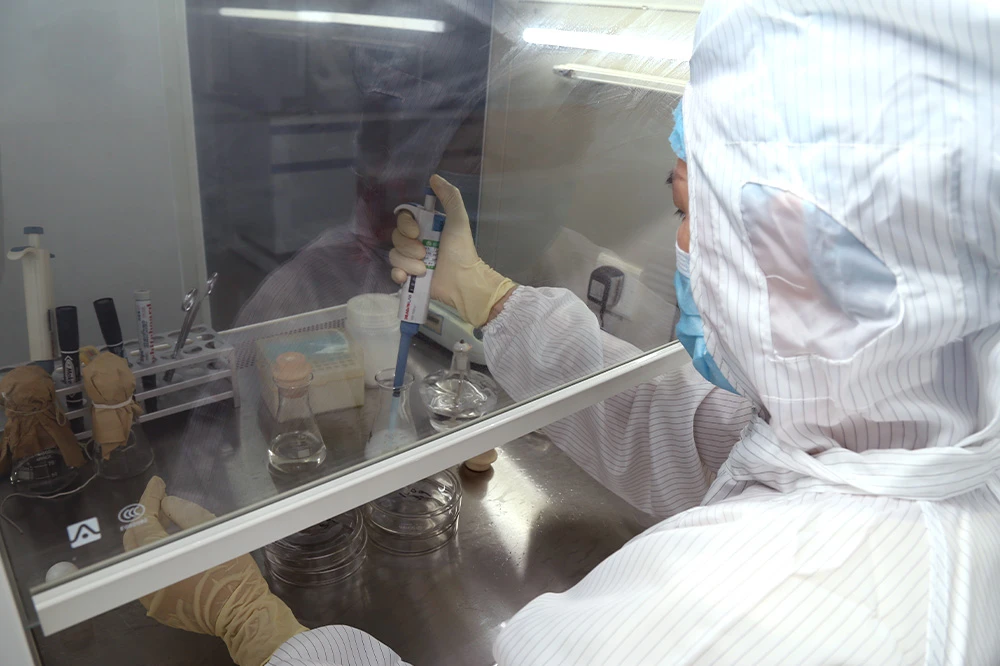
What Is This Guide About?
Learn 7 concrete steps to verify a Chinese factory's ISO 22716 certificate, including registrar checks, audits, and red flags.
Category
ISO 22716 certification authenticity
Audience
Brand owners, procurement, R&D
Updated
August 2026
To verify ISO 22716 certification authenticity for a Chinese factory, request a certificate copy and check the issuing body's name and number against the official registrar's database (e.g., SGS, Intertek, TÜV), contact the registrar directly to confirm the certificate is valid and covers the factory's actual scope, and cross-check that the factory's name and address match the certificate. Additionally, require a recent audit report, perform an on-site or video audit, and verify the certificate's validity period and any scope limitations. Genuine certification always comes with a documented audit trail you can trace.
The Difference Between ISO 22716 and Cosmetics GMP
ISO 22716 is the international standard for Good Manufacturing Practices (GMP) in cosmetics, but it is not a legal requirement—it's a voluntary certification. Cosmetics GMP (Cosmetic GMP) is a similar standard but often includes additional requirements from bodies like the FDA (US) or ASEAN. Many Chinese factories hold both, but ISO 22716 is the most widely recognized globally, especially for export to the EU.
Key difference: ISO 22716 focuses on the entire manufacturing process—from raw material reception to finished product dispatch—while Cosmetics GMP adds stricter hygiene and personnel training requirements. For a brand owner, ISO 22716 is a baseline; Cosmetics GMP is a stronger guarantee. Always ask which standard the factory actually holds and verify the certificate matches the claimed standard.
Table: ISO 22716 vs Cosmetics GMP – What to Check
| Component | ISO 22716 | Cosmetics GMP |
|---|---|---|
| Basis | International standard (CEN) | Based on FDA/ASEAN guidelines |
| Audit frequency | Annual surveillance audits | Annual or bi-annual |
| Scope | Entire production chain | Includes facility & hygiene |
| Certificate | Issued by third-party registrar | Issued by third-party registrar |
| Acceptance | EU, Asia, most global markets | US, ASEAN, some LatAm countries |
Step-by-Step Verification Process (7 Steps)
- Request the full certificate – not a screenshot. Ask for a PDF with the registrar's logo, certificate number, issue date, and expiry date.
- Identify the issuing body – Common registrars for Chinese cosmetic factories: SGS, Intertek, TÜV Rheinland, Bureau Veritas, and China Certification & Inspection Group (CCIC). Note the exact name and office.
- Contact the registrar directly – Use the official website contact, not the phone number on the certificate. Email them with the certificate number and factory name. Ask for confirmation of validity and scope.
- Check the factory's name and address – The certificate must exactly match the factory's business license (except for registered address vs. production site, but both should be clearly stated).
- Verify the audit report – Ask for the latest audit report (usually within 12 months). Check for any non-conformities and how they were resolved.
- Perform a video or on-site audit – If possible, hire a third-party inspector (like SGS or a local Chinese agency) to verify the production line matches the certificate scope.
- Check validity and expiration – ISO 22716 certificates are usually valid for 3 years, with annual surveillance audits. A factory with an expired certificate is a red flag.
Red flags to watch: cheap-looking certificates (no watermark or QR code), issuing body names that sound similar but are not accredited, certificates for a different factory address, or reluctance to share audit reports.
How to Check ISO 22716 Certification Authenticity: Practical Tools
- Registrar databases: Some registrars (e.g., SGS) have public databases where you can check certificate status with the certificate number.
- QR codes: Many modern certificates include a QR code that links to the registrar's validation page. Scan and verify.
- Accreditation bodies: Check if the registrar is accredited by a national body (e.g., UKAS, DAkkS, CNAS). Accreditation adds credibility.
For example, if a factory claims ISO 22716 from SGS, you can visit SGS's online certificate portal and search by the certificate number. If the database shows “active,” that's a strong signal. If no result appears, ask the factory for explanation.
Why Verification Matters for Your Brand (Real Costs & Risks)
Without verification, you risk partnering with a factory that has a forged or lapsed certificate. This can lead to:
- Import rejection – EU, US, and LatAm authorities may reject your products if the factory isn't certified.
- Legal liability – In some markets (e.g., EU), you as the brand owner are responsible for safety compliance.
- Brand damage – A quality incident from an uncertified factory can destroy your reputation.
Financially, a proper verification costs $200–$1,000 depending on whether you hire a third-party inspector. That's trivial compared to a $10,000–$50,000 batch recall.
Certification Verification for Your Private Label Products
When you're ordering private label products like private label clay mask or hydrogel sheet masks, the factory's ISO 22716 certification directly impacts your ability to sell in regulated markets. You must verify that the certificate covers the specific product type (e.g., leave-on vs. rinse-off) and that the factory's quality control processes align with your documentation.
For masks, ask for the certificate's scope to include “cosmetics” or “skin care” category. Some factories may have certification for only certain lines—verify that your product category is included.
Real-World Example: What a Forged Certificate Looks Like
In a 2024 industry case, a Chinese factory in Guangzhou showed a certificate from “Global GMP” with a logo resembling TÜV. The certificate number was not in TÜV's database, and a call to TÜV confirmed it was fake. The factory had actually applied for ISO 9001 but not ISO 22716. The brand owner avoided a costly mistake by following the verification steps above.
Cost of Verification vs. Cost of a Wrong Partner
| Verification Method | Cost (USD) | Time |
|---|---|---|
| Registrar database check | $0–$50 | 10 minutes |
| Direct email to registrar | $0–$100 (if via agency) | 2–3 days |
| Third-party on-site audit | $500–$1,500 | 2–5 days |
| Hiring a Chinese sourcing agent | $200–$500 + expenses | 1 week |
Expected cost: Budget $500–$1,000 for a thorough verification, including a video audit or on-site inspection. This investment eliminates the risk of regulatory rejection.
Beyond ISO 22716: Additional Certifications to Consider
- Cosmetics GMP (US FDA standard) – Required for some US retailers.
- BSCI (Business Social Compliance Initiative) – For ethical sourcing and labor audits.
- ISO 9001 – Quality management, but not specific to cosmetics.
- MSDS (Material Safety Data Sheets) for raw materials.
Your factory should be able to provide these on request. If they hesitate, that's a red flag.
Conclusion: Make Verification a Standard Procedure
Don't rely on a certificate photo. Always follow the 7-step process. A legitimate factory like Skincraftlab will gladly provide a certificate copy, registrar contact, and audit reports for any product, including your custom bio-collagen absorbable masks. Verification is a small step that safeguards your entire supply chain.
FAQ
Q: How to check ISO 22716 certification authenticity Chinese factory?
A: To check ISO 22716 certification authenticity for a Chinese factory, request the full certificate PDF, identify the issuing registrar (e.g., SGS, Intertek, TÜV), visit the registrar's official website and contact them directly with the certificate number to confirm validity and scope. Cross-check the factory name and address, verify the audit report date, and consider a video or third-party on-site audit. Never rely solely on a screenshot.
Q: What is the difference between ISO 22716 and Cosmetics GMP certification?
A: ISO 22716 is an international standard for GMP in cosmetics, recognized globally, while Cosmetics GMP is a similar standard based on US FDA/ASEAN guidelines, often with stricter hygiene requirements. Both are voluntary but ISO 22716 is the baseline for EU and most Asian markets. Check which one your factory holds and verify the certificate scope matches your product type.
Q: How often is ISO 22716 certification audited in China?
A: ISO 22716 certificates are typically valid for 3 years, with annual surveillance audits performed by the registrar. A factory that has passed annual audits will have a current surveillance audit report within the last 12 months. Ask for this report to ensure continuous compliance.
Q: What are common red flags in fake ISO 22716 certificates?
A: Common red flags include: certificate lacks a registrar's logo, no certificate number, issuing body not accredited, factory address doesn't match business license, QR code leads to a non-official page, or the factory refuses to share audit reports. Also be wary of certificates with typos or inconsistent font sizes.
Q: Can I verify ISO 22716 certification for free?
A: Yes, you can verify by contacting the registrar's official customer service or checking their public database if available. SGS and Intertek charge a small fee for written confirmation, but a simple email may be free. Always rely on official registrar channels, not the factory's claims.
Q: Is ISO 22716 mandatory for cosmetics export to the EU?
A: No, ISO 22716 is not mandatory under EU law, but it is the de facto standard for demonstrating GMP compliance under the EU Cosmetics Regulation (EC) No 1223/2009. Exporters should expect buyers to require ISO 22716 or Cosmetics GMP certification; without it, market entry is difficult.
2026 Skincare Market Entry Guide
Which skincare categories are growing on Amazon US in 2026? Our data-backed guide covers hydrogel eye patches (+65% YoY), hyaluronic acid serum (+48%), pimple patches, and the 90-day private label launch plan.
No spam, ever. Unsubscribe anytime.
What Are the Key Facts Before You Request a Quote?
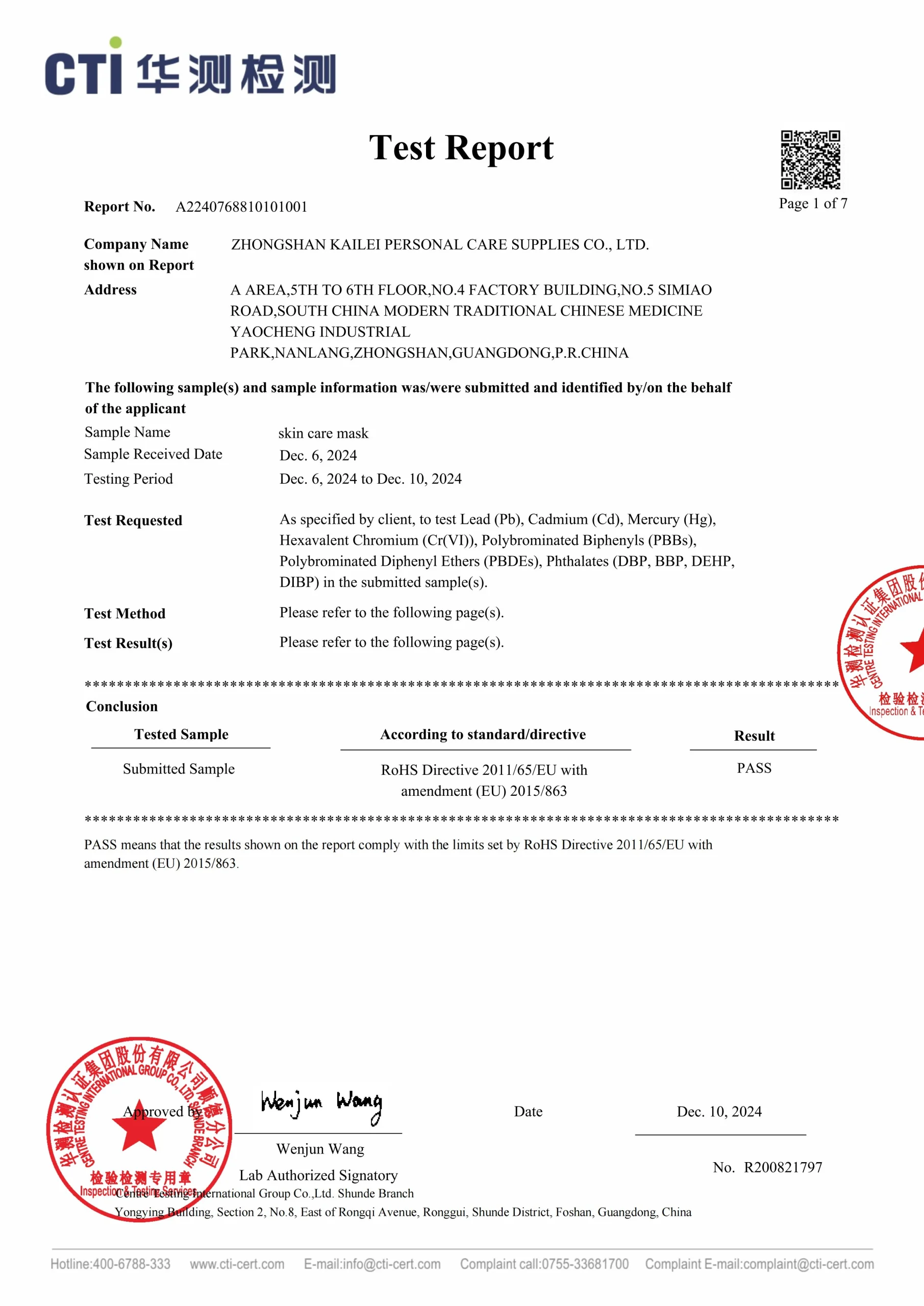
Skincraftlab is a skincare OEM/ODM contract manufacturer based in Zhongshan, Guangdong, China, operating since 2007 and serving 2,000+ brands across 30+ countries. Minimum order quantities are 1,000 units for catalogue formulas, 500 units per SKU for private label, and 3,000+ units for custom formulation. Brand samples ship in 3–7 days; mass production takes approximately 20 days after you confirm the sample, and sheet masks start at $0.08–$0.35 per piece. Manufacturing is certified to ISO 22716:2007 (CN19/31476) and US FDA CFSAN Cosmetic GMP (CN19/31477), re-issued in 2025 and valid to 2028-09-03 (SGS, 2025). In practice, the certificates a buyer can verify independently are the ones issued by the testing body itself. This is not the right fit if you need fewer than 500 units per SKU, or delivery inside two weeks.
| Topic | Details |
|---|---|
| Category | ISO 22716 certification authenticity |
| Minimum order | 1,000 units standard; 500 per SKU private label; 3,000+ custom |
| Samples & production | Brand samples 3–7 days; production approx. 20 days after confirmation |
| Last updated | August 2026 |
How Do You Apply This Guide to Your Own Project?
- 1Step 1: match the format to your unit cost — for example, sheet masks run $0.08–$0.35 per piece at 1,000 units, while serums run $1.50–$5.00 per bottle.
- 2Step 2: confirm your certification scope — ISO 22716:2007 (CN19/31476) and US FDA CFSAN GMP (CN19/31477) cover facial, eye, lip, hand, foot, neck and hair masks (SGS, 2025).
- 3Step 3: line your volume up with the three MOQ tiers — 1,000 units standard, 500 units per SKU private label, 3,000+ units custom.
- 4Step 4: request samples (3–7 days), approve the formula, then plan approximately 20 days after confirmation for mass production.
- 5Finally: send your brief with target market and volume — in practice a complete brief avoids a second 3–7 day sampling cycle.
Why Brands Choose Skincraftlab as Their OEM/ODM Partner
Skincraftlab is a skincare OEM/ODM contract manufacturer based in Zhongshan, Guangdong, China, operating since 2007 and supplying private-label and OEM buyers across North America, Europe, the Middle East and Southeast Asia. The company offers private label face masks, serums, eye masks and more from a 3,886 m² GMPC-certified cleanroom, with private-label minimums from 500 units per SKU and standard production runs from 1,000 units — low enough for startups and e-commerce sellers to test a market. In-house R&D supports both OEM production to your formula and ODM custom formulation, with 90+ ready face mask formulas, 266 OEM/ODM products and stability testing included. Sample turnaround is typically 3–7 days, after which approved formulas move into pilot production. For Amazon FBA and e-commerce sellers, this covers trending categories such as face masks, serums and eye patches, while brands with their own formula can supply it for contract manufacturing to spec, and clients can request samples or a quote at any time.
Frequently Asked Questions
How to check ISO 22716 certification authenticity Chinese factory?
What is the difference between ISO 22716 and Cosmetics GMP certification?
How often is ISO 22716 certification audited in China?
What are common red flags in fake ISO 22716 certificates?
Can I verify ISO 22716 certification for free?
Is ISO 22716 mandatory for cosmetics export to the EU?
Related Posts

PDRN Serum OEM China: 2% vs 0.5% Salmon DNA Specs
What 2% vs 0.5% PDRN salmon DNA really means in an OEM spec sheet, plus rolling forecast terms for 500,000 pimple patches and hydrogel under-eye patch MOQ/FOB math.

Chat Responsiveness SLA for OEM Skincare Inquiries in China
What a realistic chat responsiveness SLA looks like for OEM skincare inquiries in China — plus hydrocolloid vs hydrogel pimple patch sourcing specs and costs.

Pimple Patch OEM Line Capacity: 1M Units/Month Ramp-Up
A factory-floor ramp-up plan for taking a dedicated hydrocolloid coating line from pilot to 1 million pimple patch units per month in China, with real cycle times and QC gates.